...observations and ramblings from a learner and traveler...

Showing posts with label Genesis. Show all posts

18 May 2023

'Pollution and the Death of Man' - an odd title for a helpful book

  Books that speak to the real issues of humanity have a way of enduring. About 2 years ago when I posted 'Wasteful Wardens of the Planet', one of you readers suggested 'Pollution and the Death of Man: The Christian View of Ecology' by Francis Schaeffer. Excepting the appendix, his words fill only about 80 pages and were published in 1970 with deep concern for both the destructive human habits towards our world and the lack of a biblical mindset on the topic by those who claim the Bible as their guide. The book can still be read with benefit as a valuable guide to where we're [still] at, where we should be at, and where others are [still] at around us. Schaeffer, as normal, is gracious, perceptive, and unafraid to say when he believes others are more biblical in their thoughts or actions than Bible-claimers are.

 Below I just want so share some of the quotations that I found thought-provoking although these quotations won't form a full comment on the book. (Bold emphasis added; italics original.)

Psychologically I ought to "feel" a relationship to the tree as my fellow creature ... we should realize, and train people in our churches to realize, that on the side of creation  and on the side of God's infinity and our finiteness-we really are one with the tree. (pg 54)

So the Christian treats "things" with integrity because we do not believe they are autonomous. (pg 54)

God makes a promise here [in Genesis 9] that embodies  all creation. God is interested in creation. He does not despise it. There is no reason whatsoever, and it is absolutely false biblically, for the Christian to have a platonic view of nature. What God has made, I, who am also a creature, must not despise. (pg 61)

[Citing Romans 8], The blood of the Lamb will redeem man and nature together, as it did in Egypt at the time of the Passover, when the blood applied to the door-posts saved not only the sons of the Hebrews, but also their animals. 

It is interesting that almost the whole "curse" in Genesis 3 is centered upon the outward manifestations. It is the earth that is going to be cursed for man's sake. It is the woman's body that is involved in the greatly multiplied conception and pain in childbirth. (pg 67)

On the basis of the fact that there is going to be total redemption in the future, not only of man but of all creation, the Christian who believes the Bible should be the man who -with God's help and in the power of the Holy Spirit- is treating nature now in the direction of the way nature will be then. (68-69)

Killing of animals for food is one thing, but on the other hand they do not exist simply as things to be slaughtered. ... Many men fish and leave their victims to rot and stink. But what about the fish? Has he no rights -not to be romanticized as though he were a man- but real rights? On the one hand it is wrong to treat the fish as though it were a human baby; on the other hand, neither is it merely a chip of wood. 

It is always true that if you treat the land properly, you have to make two choices. The first is in the area of economics. It costs more money, at least at first, to treat the land well. ... The second choice involved is that it usually takes longer to treat the land properly. And these are the two factors that lead to the destruction of our environment: money and time- or to say it another way, greed and haste.

[Regarding certain people's explicit call to pantheistic belief as an aid to ecological responsibility,] Pantheism gives you an answer for unity, but it gives no meaning to the diversity. (pg 30) [This philosophical question of unity and diversity is also important in his discussion of the Trinity elsewhere.]

07 January 2021

8 Perspectives on the Bible's Reliability

  For quite some time, I have been making a collection of different approaches to dealing with the reliability of the Bible. My recent post regarding undesigned coincidences in the New Testament is coincidental to this ongoing collection. The interesting thing about such a discussion is that it has to be held in different ways with different people. The reasons that my Muslim friends doubt the reliability of the Jewish and Christian Scriptures are different from those that my atheist, agnostic, or Christian-raised-but-still-wrestling-with-the-idea friends will have. Beyond that, when my kids want to know why I accept one collection of Scriptures as divinely-given and reliable but not another collection, the discussions are again upended. 


  What I propose to give below is not so much an argument for the reliability of Scripture as it is a collection of the different ways that I have seen and heard the Scriptures argued for. Personally, I find certain arguments more compelling than others, but that is not really the point here. My point is to collect them as group. Note that these are also not arguments for Scripture's inerrancy or inspiration directly; that is relevant, but not the focus here.  

1. Literary structures - This argument has particular force in relation to the idea that Scripture was redacted over generations. If this is so, the structural unity across individual works and swaths of works is staggering. On the other hand, if the writings are works by individual authors, this unity makes much more sense. This particularly came home to me as I researched what became my article on blessing in Genesis, a book that many believe is heavily redacted or pieced together.  

2. Internal claims - The Bible itself claims to be reliable and God-sent; it claims to be unchanging. One may immediately object that this is a circular argument; however, imagine if the Bible made no such claim! In other words, the Bible's claim to divine origin and unchanging character and content is significant for faith. 

  In line with this, the Bible also mentions many other sources that could have been included in the biblical canon; some of those were by the same authors whose other writings are included. So, alongside its claims to reliability and divine sanction, the Bible claims a certain selectivity or exclusivity. Not all of Paul's or the prophets' or the chroniclers' writings were equal or (regarded as) Scripture. 

3. Manuscript evidences - This argument for the reliability of the biblical texts is an overwhelming one when compared to any other ancient document (although the claims of Scripture are correspondingly extraordinary.) Still, there are over 5,800 Greek manuscripts of the New Testament besides about 20,000 manuscripts of ancient translations into other languages. Separately, the Old Testament Scriptures have thousands of manuscripts in Hebrew, plus translations. (A hard number of OT manuscripts is surprisingly hard to find given how common the 5,800 number is for NT manuscripts: this site has the most concrete number I could find.)

   Not only is there an argument based on the massive number of manuscripts that were preserved, but there is also the consistency of the text that has been seen. As the number of manuscripts available to scholars has exploded in the last couple centuries, Christian doctrine has not needed to change or be adjusted. There have been places where copying or spelling errors have become evident, but this does not undermine a claim to reliability. Christians do not claim that any single published copy is a perfect copy of the entire Scripture. Instead, Christian belief is that the original manuscripts were perfectly reliable, and we have received reliable copies of them.

4. Historical progression of acceptance - This argument rests on the fact that the Bible presents a 'telescoping' view of its revelation. In other words, each section builds on the preceding one; Moses is built on by Samuel; Samuel and Moses are built on by David and Solomon; the prophets built on those that preceded them; Jesus (as quoted, though he did not write any of the New Testament himself) built on the Old Testament, and the disciples and earliest Christian witnesses built on all that preceding revelation. Below are a few thoughts from the NT concerning the OT:  

- Jesus’ acceptance of OT (Mt 23:35; Lk 11:51; Lk 24:25, 27, 32, 44-48; Jn 5:45-47; his regular quotation & amplification, references to fulfillment and the prophets; Mt 21:42; Lk 4:16-21; 22:37; Jn 7:[38], 42; 10:34-36; 13:18; 17:12; 19:12)

- Jesus' disciples/apostles' acceptance (Jn 1:45; Lk 24:32; Acts 13:27; constant quotation and allusion)

- There is also acceptance of other NT writers even within the NT - Peter accepts Paul as a Scripture writer (2 Peter 3:15-16) where he references Paul's writings among 'the other Scriptures.' 

   One might ask why Moses' original readers accepted his writings. I would suggest that minimally these were the people who had been at Mount Sinai and had heard the words and been terrified at the presence of God. Thus, their acceptance was not simplistic; it was multi-faceted, through faith and experience. With a bit of thought, one can extrapolate further along these lines for Moses' and others' writings.

5. Consistency with the experience world - The subjectiveness of this argument does not necessarily blunt its impact. The world described in the Bible matches the one we experience. Among other things, in the Bible we are led to expect a world of great beauty and humans made 'in the image of a good God' while we are also told that an enemy has brought ruin and destruction upon all the creation. Thus, what is called 'natural revelation' matches both the glories and horrors that we see and hear.

6. Undesigned coincidences - With the recent post on this, I will not extrapolate much, but this is similar to the 'literary structures' argument. The biblical writings themselves often confirm and support each other in the sorts of ways that argue for their authenticity as eyewitness accounts.
 
7. Archaeology - The biblical accounts have shown time and again that they are accurate in historical details, at least to the extent that they care to draw attention to them and that we have found independent witness to the same events. This area is also where there are still many questions and constant developments. I would suggest that no single artifact could sufficiently prove or disprove such a book, not even Noah's Ark in full preservation in the Mountains of Ararat. However, some of the archaeological support of Scripture has offered stunning corroboration in its minute detail. 

8. Impact on art, history, and culture - The little book, "Christianity: Fundamental Teachings" that I mentioned being published by the Turkish Church says it this way, "The Holy Bible is the most influential and successful work ever witnessed" (pg 74). It goes on to list the Bible's influence in inspiring "world literature, fine art, architecture, music, paintings, and other branches of art" as well as influencing the development of science, human rights, gender equality, and democracy. 

24 October 2020

on Prophets (and Miracle Workers) - with 3 trivia questions

 Three trivia questions: (answers at the bottom of the post)

 a. Who was the first miracle worker mentioned in the Bible?

 b.  Who is the first person who is called a prophet in the Bible?

 c. How many prophets are listed as such before the first prophetess is recorded? 

The Prophet as Intercessor

   Especially in the second instance, I would say that the answer is a person whom we do not often consider to be a prophet. Yet, the Lord calls him one. More interestingly, the logic of being a prophet is given like this, "Make this right, and he is a prophet, so he will pray for your healing." This is an interesting role for the prophet, the Prophet as Intercessor. This is the role that we often ascribe to the priest, and rightly so. However, here it is so, and maybe elsewhere? Incidentally, this prophet had just interceded for God's mercy on pagan cities two chapters before in Genesis 18. But maybe we find here that intercession is also a function of being a prophet. 

The Prophet as the Speaker of God's Word

  Further thoughts, I have been reading through the OT Historical Books, describing the first nation(s) of Israel from the death of Moses through their exile from their Promised Land centuries later. One of the fascinating features of these stories is a stream of references to 'prophets,' plural. Among the people that I have known who take Scripture seriously, I suspect many of us think of prophets as solitary and sporadic icons throughout biblical history; we'd quickly list Moses, Samuel, Nathan, maybe Gad, Elijah, Elisha, and then skip forward probably to the writing prophets like Daniel and Jonah and Isaiah, (probably also forgetting most of the prophetesses whom I wrote about a while back.) But that notion of the 'rare prophet' of Israel doesn't bear up under closer study of Scripture. Prophets were often relatively common, though not always (1 Sam 3:1). 

 The idea that prophets were rare probably reflects the relative space given to describing the activity of individual prophets. However, it does not reflect the actual nature of the prophetic role in Israelite society at that time. Now, springing to mind for some might be 'the sons of the prophets' who make appearances throughout Elijah and Elisha's stories: Obadiah hid 100 prophets in Ahab's time (1 Kings 18), and 2 Kings 2 records 'sons of the prophets' living in Bethel and Jericho, numbering at least 50. And indeed, there seem to have often been many prophets scattered throughout the society. 

- Pre-Samuel prophets/prophetesses: Exodus 7:1; 15:20; Numbers 11:25-29; Judges 4-5; Judges 6:8

- Saul meets a group of prophets after leaving Samuel and joins them in prophesying (1 Samuel 10:5-13)

- Saul and his messengers meet a company of prophets led by Samuel and join them in prophesy (1 Samuel 19:20-24)

- 1 Kings 13 has the odd story of two unnamed prophets who speak the word of the Lord, although one lies about this at one point. The purpose of this story seems to be to show the corruption of even true prophets during this time. But for our study, that is not key for now.

- Then, there are named prophets (and a prophetess) who are mentioned more briefly: many sons of Asaph, Heman, and Jeduthun who prophesied are mentioned (1 Chr 25:1-5); Asaph the seer (2 Chr 29:30); Shemaiah (1 Kings 12:22; 2 Chr. 12) Ahijah the Shilonite (1 Kings 11) and Iddo the seer (2 Chr 9:29), Huldah (2 Kings 22:14), Azariah, (2 Chr 15:8), Hanani the seer (2 Chr 16:7-10), Jehu, son of Hanani (1 Kings 16:1-7; 2 Chr 19:2), and Micaiah (1 Kings 22). (Organized roughly chronologically)

- 1 Kings 20 has 2 separate stories of unnamed prophets who deliver messages to Ahab, King of Israel.

- The sons of the prophets mentioned right before Elijah was taken up to heaven are mentioned again in 2 Kings 4, 5, 6, and 9.  

- 2 Chronicles 33:18 speaks of multiple seers speaking God's word to Manasseh.

- Many of the Writing Prophets are also mentioned within the Historical Books though their stories are often unrecalled because of the focus on the texts they left. Isaiah (2 Kings 19-20; a major prophet even without the book), Jonah (2 Kings 14:25), Haggai and Zechariah (Ezra 5:1-2; 6:14).

The Prophet as Scribe

 Interestingly, many of the prophets seemed to have a history-writing role, though whether these are the recorded Scriptures that we have is not necessarily as clear. 1 Chronicles 29:29 mentions Samuel, Nathan and Gad in this regard. Nathan, Ahijah, and Iddo are listed in 2 Chronicles 9:29; Shemaiah and Iddo are mentioned in 2 Chronicles 12:15; and Iddo is mentioned again in 2 Chronicles 13:22. Also, Isaiah is recorded in this light (2 Chr 26:22; 32:32).

 The history of prophets and prophecy in Scripture is much broader than we often think about, and this is before we even consider the NT implications. Likely there are many more Scriptures that could be added to this discussion, feel free to do so if they will enrich our understanding!


Additional passages: 2 Samuel 15:27 - a high priest called a seer; 2 Chronicles 24:27 - 'many oracles'; 2 Kings 17:13 - warnings to Israel 'by every prophet and every seer' to turn from wickedness; 1 Sam 9:9 - equates seers with prophets; Zechariah the son of Jehoida (2 Chr 24:20); Isaiah 8:3 (unnamed prophetess).


Answers:

a. Moses (Ex 4:1-9 and beyond), as far as I can tell. Can you think of any previous instance where someone performs a miracle? Joseph's dream interpreting may be the closest, but dream interpreting seems like its own separate category. 

b. Abraham (Gen 20:7)

c. Two (Only Abraham and Aaron are named as prophets before Miriam. Deborah follows quickly as well with only Moses [Deut 18:15] and the incident in Numbers 11 intervening)


Related posts: The Odd Notion of 400 Silent Years; How Many Prophetesses are there in Scripture?

04 July 2020

"Your Father, the Devil": Satan as a Father in the Bible

 As a father of growing and changing children, I want to keep growing in both my understanding and practice of fatherhood. Recently, I was thinking of the fact that Satan is discussed as a father in Scripture. So, it seemed worth exploring what characteristics are associated with devilish fatherhood.

 The images and metaphors associated with the devil are almost always violent or oppressive in some way whether emotionally (hatred, wrath, tempt, incite, furious), physically (contend, death, snare, take away, bound, devour), mentally (deceit, lies, schemes, disguise), or social (accuse, harass). 

Meanwhile, the images and metaphors associated with God may also at times be violent (Genesis 6:13; Exodus 15:3), but they are neither exclusively nor predominately so. Indeed, the names of God particularly associated with fatherhood are of a particularly different variety (Father of the fatherless, Holy Father, our Father in heaven, the Father of glory, the Father of mercy, the Father of lights, the living Father, etc.)  Along with their sources in the Bible, these can be seen in the 'Biography of God' that I posted some years ago.  

So...

In Scripture, what traits are associated with the fatherhood of Satan/the devil / the evil one? 

What qualities in a father are not sourced in the fatherhood of God?

-       John 8:34-47 (38, 41, 44) - The devil and his children...

o   lie, "the father of lies"

o   fight against truth

o   murder; seek to kill

o   cannot bear to hear the word of Christ


-       1 John 3:8-15 (8, 10, 12) - The one who is of the evil one...

o   Makes a practice of sinning; Does not practice righteousness

o   Does not love his brother

o   Hates and murders his brother


-       Matthew 13:24-30, 36-43 (38-39) - the children of the evil (one)...

o   intermingled with those of the Heavenly Father and may be indistinguishable from those of the Father’s kingdom even to the angels. (cf 2 Cor 11:14)


-       Acts 13:6-12 (10) - This particular example of a 'son of the devil'...

o   opposed God's messengers and sought to turn another person away from the faith 

o   was an enemy of all righteousness

o   was full of all deceit and villainy

o   made crooked the straight paths of the Lord (cf. Luke 3:3-5; the opposite of John the Baptist) 

  Other references that seem vaguely relevant but not really: Matthew 23:15; Ephesians 2:2-3; 5:6;  John 17:12; 2 Thessalonians 2:3; 2 Peter 2:14

  If you have any thoughts or passages or disagreements to contribute, I'd be interested to hear them on here or in person.

06 February 2020

Chutzpah vs. Chutzpah

 My favorite living storyteller is Malcolm Gladwell; his books are the only books that my wife and I have consistently listened to together. I am looking forward to listening to his most recent book soon. Recently I listened to an episode from his podcast, Revisionist History. It was fabulous, just like I hoped; Gladwell is basically peerless in his ability to weave a narrative together.

 Due to changes in the way I commute, I have started to listen to stuff on my way home. This was quite rare until the last 18 months and still sporadic until the last several months. Because I am just trying this out, there's a lot of experimentation involved... I've tried audiobooks (Chesterton's Orthodoxy has been fantastic so far), podcasts, and lectures (English in America: A Linguistic History by Natalie Schilling was very informative, especially as an English teacher).

 Anyways, this episode of Revisionist History "Chutzpah vs. Chutzpah"was fantastic. It included the mafia and The Godfather, which I've never seen, but which my students assure me is the greatest movie ever made. It included Hogan's Heroes which our family secretly enjoys, while hoping it doesn't offend our German friends! It included a wonderfully winding story about the meaning(s) of 'chutzpah' practically (There is some inappropriate language from an interviewee.) It includes discussions of shame and shamelessness, Abraham's intercession for Sodom and Gomorrah in Genesis 18, cross-cultural differences and acculturation, immigration, and more!

 It also includes insight on modern culture, particularly American culture. Online and from a distance, I see increasing acknowledgement that the brokenness in American politics reflects the society, not causes the society's polarization. This episode essentially avoids the specifics in order to deal with the larger picture. The question it suggests  is "Have we confused [America's] chutzpah with [Israel's] chutzpah?"

All in all, this episode touches on a ton of areas that are important to me! I highly recommend it!

PS Even the ads are interesting and informative since even they are interviews done by Gladwell with business executives.

25 April 2017

A Biblical Theology of Blessing in Genesis

 I have been studying blessing in the book of Genesis for a number of years, particularly concentrating on it for a two-year period around 2010. I experimented with writing my research into an article several times, but it never came together. Last summer, I decided to try to actually get the article written as a means of getting back into academic thought patterns as I start a master's in TESOL this summer.

 I submitted it to Themelios, and today it was published as "A Biblical Theology of Blessing in Genesis."

 I would be remiss not to mention the impact of one teacher on this whole project: without Dr. Horn, I almost certainly would never have studied, written or submitted this for publication. Dr. Horn told our class regularly to write and to submit our best work for publication, and he'd occasionally mark what our best work was. He said it often enough that I finally believed he was serious. Beyond that, he fostered my love for Genesis in one class, taught me what biblical theology was in another class, and provoked my interest in the meaning of 'blessing' in a sermon. I have truly been blessed by his impact on my life and my learning.

**A couple of previous posts that stemmed from this same study: Divine Blessing and Food; The Broken Ugly, a poem.

02 February 2017

Resurrection - quotes from Wright

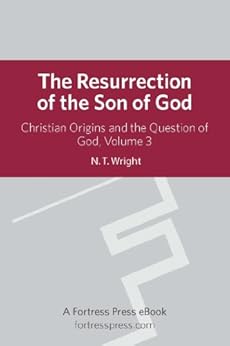
 For a number of years I have been setting goals of various sorts at the beginning of the year, things to guide me in my year. Many of them I never get done, but others I do, or at least I get farther than I would have otherwise. This year, my theological reading goal was to read a substantial portion of N.T. Wright's The Resurrection of the Son of God by Easter. I had been told by a good friend that it was probably the best book available on the resurrection of Jesus Christ. And, in fact, it has been excellent - there are certainly things to disagree with along the way, but the book has painted a beautiful picture within historical and literary contexts of the ideas of resurrection in the ancient world. Here I'd like to share some extracts, any emphasis is added by me.


[Resurrection was] the reversal or undoing or defeat of death, restoring to some kind of bodily life those who had already passed through that first stage. It belonged with a strong doctrine of Israel’s god as the good creator of the physical world. It was the affirmation of that which the pagan world denied... (Kindle 4667)

Resurrection is precisely concerned with the present world and its renewal, not with escaping the present world and going somewhere else; and, in its early Jewish forms right through to its developed Christian forms, it was always concerned with divine judgment, with the creator god acting within history to put right that which is wrong. Only if we misunderstand what resurrection actually involved can we line it up with the kind of ‘pie in the sky’ promises which earned the scorn of many twentieth-century social reformers. (Kindle 3303)

The constant love of YHWH was never merely a theological dogma to the ancient Israelites. In many parts of their literature, and supremely the Psalms, we find evidence that they knew this love in vivid personal experience. (Kindle 2558)

Where we find a glimmer of hope like this, it is based not on anything in the human make-up (e.g. an ‘immortal soul’), but on YHWH and him alone. Indeed, YHWH is the substance of the hope, not merely the ground: he himself is the ‘portion’, i.e. the inheritance, of the righteous, devout Israelite. (Kindle 2674)

Echoes of the Genesis creation narratives lurk in the shadows of these passages: it is from the dust that YHWH creates humans, breathing into them his own breath, and when he takes it away again they return to dust once more.162 The fresh gift of his breath will then bring the dust to life.163 The promise of resurrection is thus firmly linked to creation itself, which was the basis of the normal ancient Israelite celebration of life in the present, bodily life in YHWH’s good land. This robust affirmation of the goodness of life in YHWH’s world and land is what is called into question when Israel sins and faces punishment in the form of national catastrophe. (Kindle 3002)

21 June 2015

Scatter together - thoughts on multiplication, image bearing and witness

  A series of connections arcing across the narrative of Scripture have caught my attention recently as I again read Genesis. In Genesis 1, God the Creator makes man and woman in His own image and charges them to 'be fruitful and multiply and fill the earth...' The idea being that God's image as reflected in the woman and man would be multiplied and magnified all across the creation. Obviously this purpose is not fulfilled by the couple who violate God's Law and are sent away from their specially-prepared home. At this point though, they do begin to multiply, but now it is a disfigured image which is spread.  And indeed, the corruption grows till the earth is 'filled with violence' (instead of with God's image). So God eradicates all but a single family whom He saves; they too are are tainted, however, they also look to His grace and promises of deliverance. (ch. 6)  After destroying the accumulated humanity, God commands this family to 'be fruitful and multiply and fill the earth' - again.  The point? Last time it was filled with the wrong thing - not people reflecting their Creator. 

  This pattern can be seen repeatedly through Scripture in small cycles and large; and indeed, we can see it continuing today in ways and with names both expected and unexpected. Because essentially this is the same task that Jesus Christ left to those who loved and followed Him when He left - 'Go everywhere, make more people who follow in my ways from every type of people there is...' And this command, like the original, is a communal command: no one goes everywhere or fills the earth by his or her self.  But a seeming paradox lies at the heart of this command - 'scatter as a community!'


Scatter together!
 Actually, we see this problem in the succeeding story in Genesis: after the great destroying flood and the re-creation, humanity decides to build a city and a tower to improve their own image and to prevent their being 'dispersed over the face of the whole earth.' (ch. 11) In other words, they were working aginst the very things they had been designed and commanded to do. As humans, we'd rather cluster and try to look good ourselves. And as God intervened this time, He used their word disperse instead of His word fill when He spread them on the earth. 

 Jesus' followers still have the same tendency towards anti-dispersal, collective-image-improving clustering instead of the communal, divine-image-reflecting earth-filling to which we have been called.

  If we are to carry out the original task, we must become like Abram who was told that he would become a 'great nation.' (Gen 12) This wasn't all that odd at the time (age 75), since his father had fathered at least one son at age 70. (Gen 11:26)  Yet as time went on, Abram's body and his wife's passed from possibility to impossibility; and while Abraham noticed, his faith in the promise not only didn't weaken, it grew, 'as he gave glory to God.' (Romans 4:18-21) If we would continue in this original work of filling the earth with image bearers, we will often have to look beyond what we see, like Abraham. We will have to look to the God who promised that it would be so someday, and we will have to trust that He can raise up image bearers from stony hearts - children to Abraham, 'the father of all who believe without being circumcised' and 'the father of the circumcised who are not merely circumcised but who also walk in the footsteps of the faith that our father Abraham had before he was circumcised.' (Rom 4:11-12)


  May we together live the united, earth-filling life of reflecting the Creator's image, following His sent Savior. 

24 March 2015

tidbits of interest from the Metropolitan

1.  A useful summary of the various sections of Scriptures and how they point to Christ in the great Story:

"There are different things contained in the Holy Scriptures, as the commandments of the law, rules of morality, prophecies, accounts of different revelations which God made of himself to man, miracles, and promises, together with many accounts of the transactions of men. However, all these tend to nothing else but to the revelation of the eternal counsels of God, concerning the salvation of mankind through our Savior Jesus Christ. Thus, for instance, the Law, by bringing us to the knowledge of our guilt before God, leads us to seek for a Deliverer; the prophecies proclaim his approach; the sacrifices point him out; the different revelations which God made of himself, either prepare us to receive the faith of Christ or illustrate more clearly the acts of our Savior. And all the promises of God, in assuring us of the mercy of our heavenly Father, rest on Jesus Christ, as our Mediator with God." (in Section 2, 'On the substantial contents of the Holy Scriptures')

2. An interesting theological speculation, 'If humanity had not fallen, then...'
"From this we conclude that if man had not broken the union by which he was closely connected with God, he would have enjoyed a most happy life on earth, and at last, according to the determination of his Maker, would have been translated to heaven, to enjoy God eternally. Of this, we have an example in the person of Enoch. (Gen. 5:24)"

from A Summary of Christian Divinity, by Platon Levshin 

01 February 2015

Luminous substances... another quote from Platon, on Creation

  In light of a couple recent blog posts about creationism, I looked specifically to see what Platon said about 'creation'; none of it was particularly unusual, but I thought this comment was interesting.


On the fourth day, the luminaries of heaven were created, the sun, the moon, and the stars, probably from the luminous substance which was created on the first day.  

  'Luminous substance'... I've never heard of that before per se, but it generally sounded like Platon understood a 24-hour day, 7-day week understanding of Genesis 1-2.

24 December 2014

Advent 2014

 This year as a family we started doing Advent readings on the mornings we ate breakfast together in December. It was a special time of sharing as a family, the girls could understand the short passages with a little explanation. Since it was an experiment, we started in the easiest way I think, we read the major prophecies that we could think of about Christ leading up to His birth. The themes were beautiful, and it seems a good tradition with which to focus on the unique Son.

2014 names of the Promised One
Genesis 3 - the One who will crush the snake's head
Genesis 12 - the Blessing
Numbers 24 - the Bright Morning Star
Deuteronomy 18 - the Prophet who is greater
Psalm 2 - the forever King and God's Son
2 Samuel 7 - God's forever King who builds God's forever house
Psalm 22 - the Sufferer
Psalm 24 - the King of Glory who is strong and mighty in battle
Psalm 110 - the High Priest like Melchizadek
Isaiah 7 - Immanuel
Isaiah 9 - a son, a child, Wonderful Counselor, Mighty God, Everlasting Father, Prince of Peace
Isaiah 53 - the despised, atoning Sufferer, God's servant
Isaiah 61 - the Spirit-anointed Healer, Liberator, and Gladdener
Micah 5 - a long-in-coming Ruler in Israel
Matthew 1 - Jesus

01 June 2014

a Biography of God

  It might seem strange, or even presumptuous, to suggest that I have a biography of God, if you have not heard of the idea before.  In my first weeks at Bible college, Dr. O suggested to us that we should each create a biography of God.  I don't remember whether he gave suggestions on format, but the idea was that we compile truths about God from the Scriptures in order to meditate on them and to have them as a foundation and anchor for life. 

 At some point, I began pursuing this idea in a chart form.  To this point, I have found well about 450 names of God as given in the English Scriptures.  I trust the list will be useful to someone else; if you have any additions or corrections I'd love to see them.  (I suspect there are close to 500 names of God in Scripture as I continue to find more fairly regularly.)

 Also, I have included references from every book of the Bible, with the obvious exceptions of the two books which don't refer to God by name (Esther, where God is known through providence; the Song of Songs where He is unreferenced as the great Lover of His own.)


Names of God References
(the One) who has the key of David, who opens and no one will shut, who shuts and no one opens Rev 3:7
a Consuming Fire Deut 4:24; 9:3; Heb 12:29
a Crown of glory Isa 28:5
a Diadem of beauty Isa 28:5
a Faithful Creator 1 Pet 4:19
a Forerunner on our behalf Heb 6:20
a forgiving God Ps 99:8
a God of faithfulness (truth) Deut 32:4
a God of justice Isa 30:18; Mal 2:17
a God of knowledge 1 Sam 2:3
a God who Hides Himself Isa 45:15
a gracious God and merciful, slow to anger and abounding in steadfast love, and relenting from disaster Jonah 4:2
a great King above all gods Ps 95:3
a great Priest over the house of God Heb 10:21
a High Priest forever after the order of Melchizedek Heb 6:20
a High Priest of the good things that have come Heb 9:11
a Jealous and Avenging God Nah 1:2
a Jealous God Ex 20:5; 34:14; Deut 4:24; 5:9; 6:15; Jos 24:19
a Living Stone 1 Pet 2:4
a man Acts 17:31
a Man of Sorrows Isa 53:3
a Man of War Ex 15:3
a merciful and faithful High Priest Heb 2:17
a Minister in the holy places Heb 8:2
a Refuge to His people Joel 3:16
a Revealer of mysteries Dan 2:47
a Rewarder of those who diligently seek Him Heb 11:6
a Righteous God Ps 7:9; Isa 45:21
a Rock of Offense Isa 8:14; 1 Pet 2:8
a Sanctuary Isa 8:14
a Servant Lk 22:27
a Shelter for me Ps 61:3
a Shield Ps 84:11
a Shoot from the stump of Jesse  Isa 11:1
a Spirit of justice to him who sits in judgment Isa 28:6
a spiritual rock 1 Cor 10:4
a Stone of stumbling (offense) Isa 8:14; 1 Pet 2:8
a Strong Tower against the enemy Ps 61:3; (Prov 18:10)
a Stronghold for the oppressed Ps 9:9
a Stronghold in the day of trouble Ps 9:9; Nah 1:7
a Stronghold to the people of Israel Joel 3:16
a Sun Ps 84:11
a Trap and a Snare to the inhabitants of Jerusalem Isa 8:14
Abba Rom 8:15; Gal 4:6
Abraham's offspring Gal 3:16
Almighty God (Lord Almighty) Gen 17:1; Rev 19:15
an Advocate with the Father 1 Jn 2:1
an Avenger (against wrongdoers) 1 Thess 4:6
an Everlasting Rock Isa 26:4
Apostle of our profession  Heb 3:1
brother of James and Joses and Judas and Simon Mark 6:3
Captain of the Lord's host Jos 5:14-15
Christ Jesus 2 Cor 4:5; Phil 3:13, 14; Philemon 1, 9, 23
Christ Jesus our Hope 1 Tim 1:1
Christ Jesus our Lord 1 Cor 15:31; Phil 3:8
Christ Jesus our Savior Tit 1:4
Christ our Passover (Lamb) 1 Cor 5:7
Christ the Lord Lk 2:11; 1 Pet 3:15
Christ/the Messiah Mt 16:16, 20; Acts 3:18, 20; 8:5; 9:22; I Pet 4:1; I Jn 5:1
Eternal Life 1 Jn 5:20
Everlasting Father (Father of Eternity) Isa 9:6
Faithful and True Rev 19:11
Father of all Eph 4:6
Father of the Fatherless Ps 68:5
God  Gen 1:1; Job 12:13; Isa 13:19; 3 Jn 6; Heb 1:8; Rev 1:6; 22:9
God in heaven 2 Chr 20:6
God my King Ps 74:12
God my Savior Lk 1:47; Tit 1:3
God of gods Deut 10:17; Ps 136:2; Dan 2:47; 11:36
God of my praise Ps 109:1
God on high Mic 6:6
God our Father Jn 20:17; 2 Cor 1:2; Phil 1:2
God the Almighty Rev 16:14; 19:15
God the Father Phil 2:11; Tit 1:4; James 1:27
God who comforts the downcast 2 Cor 7:6
God who raises the dead 2 Cor 1:9
God, the faithful God who keeps covenant and steadfast love with those who love him and keep his commandments to a thousand generations and repays to their face those who hate him by destroying them Deut 7:9
God, the God who of him who strives with God - El-Elohe-Israel Gen 33:20
God, the One of Sinai Ps 68:8
God, who never lies Tit 1:2
God, who saves the upright in heart Ps 7:10
God's Mystery Col 2:2
He in whom I take refuge, who subdues peoples under me Ps 144:2
He who alone does great wonders Ps 136:4
He who blots out our transgressions for His own sake Isa 43:25
He who by understanding made the heavens  Ps 136:5; (Ps 121:2)
He who called you out of darkness into His marvelous light 1 Pet 2:9; (Gal 5:8)
He who came by water and blood - Jesus Christ 1 Jn 5:6
He who disciplines the nations Ps 94:10
He who formed the eye Ps 94:9
He who gives food to all flesh Ps 136:25
He who has the seven spirits of God and the seven stars Rev 3:1
He who has the sharp two-edged sword Rev 2:12
He who holds the seven stars in his right hand, who walks among the seven golden lampstands Rev 2:1
He who is able to keep you from stumbling and to present you blameless before the presence of His glory with great joy Jude 24
He who is and who was and who is to come Rev 1:4, 8; 4:8
He who is enthroned from of old Ps 55:19
He who is from the Beginning 1 Jn 2:13, 14
He who is in you 1 Jn 4:4
He who is Mighty Lk 1:49
He who is true I Jn 5:20 (2x)
He who judges justly 1 Pet 2:23
He who justifies the ungodly Rom 4:5
He who keeps Israel (the Keeper of Israel) Ps 121:4
He who lives forever Dan 12:7
He who made the great lights Ps 136:7-9
He who made the Pleiades and Orion, and turns deep darkness into the morning and darkens the day into night, who calls for the waters of the sea and pours them out on the surface of the earth, the LORD is his name; Amos 5:8
He who planted the ear Ps 94:9
He who rides in the heavens, the ancient heavens Ps 68:33
He who rides through the desert Ps 68:4
He who rules by His might forever Ps 66:6-7
He who searches hearts Rom 8:27
He who spread out the earth above the waters Ps 136:6
He who supplies seed to the sower and bread for food 2 Cor 9:10
He who teaches man knowledge Ps 94:10
He whose eyes keep watch on the nations Ps 66:6-7
Head above all 1 Chr 29:11
High Priest Heb 8:1; 9:11
His Anointed Ps 2:2
His only Son 1 Jn 4:9
his Son Jesus Christ 1 Jn 1:4; 3:23; 5:20
Holy Isa 57:15; Lk 1:49
Holy Father Jn 17:11
I AM Ex 3:14; Jn 8:58
Immanuel (God with us) Isa 7:14; 8:8; Mt 1:23
Israel's Maker Ps 149:2; Hos 8:14
its (the Church's) Savior Eph 5:23
Jealous Ex 34:14
Jesus Lk 1:31; Acts 9:5; Rev 22:16
Jesus Christ 2 Cor 1:19; 1 Pet 1:2-3, 7; Rev 1:5
Jesus Christ of Nazareth Acts 4:10
Jesus Christ our Lord Rom 1:4; 1 Cor 1:8
Jesus Christ the Righteous 1 Jn 2:1
Jesus Christ, the Father's Son 2 Jn 3
Jesus of Nazareth Mk 10:47; Lk 4:34; 18:37; Acts 10:38; 22:8
Jesus our Lord Heb 13:20; 2 Pet 1:2
Judge of the living and the dead Acts 10:42;  I Pet 4:6
King of all the earth Ps 47:7
King of kings 1 Tim 6:15; Rev 17:14; 19:16
King of the nations Rev 15:3
Leader (Prince) Acts 5:31
Levi's inheritance Deut 10:9
Lord (God) of heaven Dan 5:23; Neh 1:5
Lord God Almighty Rev 4:8; 11:17
LORD GOD; Lord GOD Isa 25:8; 26:4; Obad 1:1
Lord Jesus Mk 16:19; Lk 24:3; Acts 4:33; 7:59; 8:16; 9:17; 2 Cor 1:14; 2 Thess 1:7-8, 12; Rev 22:20
Lord my God  1 Kings 17:20; Ps 7:1, 3; 30:2, 12; Hab 1:12
Lord of all Acts 10:36
Lord of heaven and earth Lk 10:21; Acts 17:24
Lord of kings Dan 2:47
Lord of lords  Deut 10:17; 1 Tim 6:15; Rev 19:16
Lord, God of our fathers 2 Chr 20:6; 24:24
Master Lk 17:13; 27:7-10
my (Chosen) Portion (in the land of the living) Ps (16:5); 73:26; (142:5); Lam 3:24
my (Everlasting) Light Ps 27:1; (Isa 60:19, 20)
my Banner (Jehovah-Nissi) Ex 17:15
my Beloved Matt 12:18; Eph 1:6
my Cup Ps 16:5
my Deliverer Ps 18:2; 144:2
my Dwelling Place Ps 91:9
my Exceeding Joy Ps 43:4
my Father Jn 14:2, 7
my Fortress Ps 18:2; 71:3; 91:2; 144:2
my Glory Ps 3:3; 62:7; Isa 60:19
my God Ex 15:2; 2 Chr 18:13; Ps 91:2; Isa  25:1; Dan 9:18
my Help(er) Ps 27:9; 30:10; 94:17; Heb 13:6
my Hiding Place Ps 119:114
my Holy One Hab 1:12
my Hope Ps 71:5
My Husband Hos 2:16; Isa 54:5
my King  Ps 5:2; 68:24; 84:3; (2:6)
my Lord Ps 16:2; 141:8
my Refuge Ps 73:28; 91:2, 9
my Rock Ps 18:2, 31; 28:1;71:3; Hab 1:12
my Salvation Ex 15:2; Ps 27:1; Isa 12:2
my Shield (around me) Gen 15:1; Ps 3:3; 119:114
my Son Ps 2:7; Heb 1:5
my Song Ex 15:2; Ps 118:14; Isa 12:2
My Spirit Gen 6:3; Joel 2:29; Hag 2:5; Zech 4:6
my Steadfast Love (Goodness) Ps 144:2 
my Strength Ex 15:2; Ps 18:1; Isa (28:6); 49:5; Hab 3:19
my Stronghold (High Tower) Ps 18:2; 144:2
my Trust from my youth Ps 71:5
my/their Shepherd Gen 48:15; Ps 23:1; 28:9; (Rev 7:17)
our Father Isa 63:16; 64:8; Jam 3:9
Our Father in heaven Mt 6:9
our God who sits on the throne Rev 7:10, (15); (6:16)
our Great God and Savior Jesus Christ Tit 2:13
our Lawgiver Isa 33:22; Jam 4:12
our Lord and Savior Jesus Christ 2 Pet 1:11
our Lord Christ Rom 16:18
our Lord Jesus Heb 13:20
our Maker Ps 95:6; (Isa 54:5)
our only Master and Lord Jude 4
our Peace Eph 2:14
our Potter Isa 64:8
our Redeemer (my, your) Ps 19:14; Job 19:25, Isa 47:4
our Redeemer from of old Isa 63:16
our Righteousness and Sanctification and Redemption 1 Cor 1:30; (Lev 21:15, 23)
Our Savior Jesus Christ (our Savior Christ Jesus) 2. Tim 1:10; 2 Pet 1:1
Peace Judg 6:24
Possessor of Heaven and Earth Gen 14:19, 22
Prince of Peace Isa 9:6
Protector of widows Ps 68:5
Rabbi Mk 10:51
Ruler  Mic 5:2; Mt 2:6
Sin 2 Cor 5:21
son of Mary Mark 6:3; (Lk 2:48)
Sovereign Lord Acts 4:24; Rev 6:10
the (Chief) Cornerstone Eph 2:20; I Pet 2:6-7
the Almighty Ruth 1:20; Job 13:3; Ps 91:1; Isa 13:6; Rev 19:6
the Alpha and the Omega Rev 1:8; 21:6
the Amen Rev 3:14
the Ancient of Days Dan 7:9, 13, 22
the Angel of God Ex 14:19
the Angel of the Lord Gen 22:11-12; 2 Kin 1:15;  Isa 37:36
the Angel who has redeemed me from all evil Gen 48:16
the Author (Prince) of Life Acts 3:15
the Beginning Col 1:18; Rev 21:6; 22:13
the Beginning of God's creation Rev 3:14
the Beloved Son Mt 12:18; Lk 3:22; 2 Pet 1:17
the blessed and only Sovereign 1 Tim 6:15
the boy Jesus Lk 2:43
the Branch Zech 3:8; (Isa 11:1)
the Branch of righteousness Jer 23:5; 33:15
the Bread of God Jn 6:32
the Bread of Life (that came down from heaven) Jn 6:35, 48 (41, 50-51, 58)
the Bright Morning Star Rev 22:16
the Brightness of God's Glory Heb 1:3
the Builder of all things Heb 3:4
the Chief Shepherd 1 Pet 5:4
the child Jesus Lk 2:27
the Christ of God Lk  9:20
the Confidence of all the ends of the earth, and of them that are afar off upon the sea Ps 65:5
the Creator Rom 1:25; I Pet 4:19
the Creator (of the new self) Col 3:10
the Creator of Israel Isa 43:15
the Creator of the ends of the earth Isa 40:28
the Deliverer Rom 11:26
the Door Jn 10:9
the End Rev 21:6; 22:13
the eternal God Rom 16:26
the Eternal Spirit Heb 9:14
the Everlasting God Isa 40:28
the Exact Imprint of His nature Heb 1:3
the Faithful (and true) Witness Rev 1:5; 3:14
the Father Mal 2:10; I Pet 1:17; Rev 1:6
the Father of glory Eph 1:17
the Father of lights Jam 1:17
the Father of mercies 2 Cor 1:3
the Father of Spirits Heb 12:9
the Fear of Isaac Gen 31:42, 53
the First and the Last Isa 44:6; 48:12; Rev 1:17; 2:8; 22:13
the Firstborn (of many brothers) Heb 1:6; (Rom 8:29)
the Firstborn from the Dead Col 1:18; Rev 1:5
the Firstborn of all Creation Col 1:15
the Firstfruits of those who have fallen asleep 1 Cor 15:20
the Founder (Author) and Perfecter (Finisher) of our Faith Heb 12:2
the Founder (Captain) of their salvation Heb 2:10
the Fountain of Living Waters Jer 2:13
the Glory of Israel 1 Sam 15:29
the Glory of their strength (His people's) Ps 89:17
the God and Father of our Lord Jesus Christ Rom 15:6; Eph 1:3; 1 Pet 1:3
the God in whose hand is your breath and whose are all your ways Dan 5:23
the God of Abraham, Isaac, and Jacob 1 Kings 18:36; 2 Chr 30:6;  ; Lk 20:37; Acts 3:13; (Gen 24:27)
the God of Abraham, the God of Nahor, the God of their father Gen 31:53
the God of all comfort who comforts us in all our affliction 2 Cor 1:3; (compare Rom 15:5 - the God of paracleting)
the God of all flesh Jer 32:27
the God of all grace 1 Pet 5:10
the God of all the kingdoms of the earth Isa 37:16; (cf 2 Kin 19:15)
the God of Daniel Dan 6:26
the God of David (his/your father) 2 Chr 34:3; Isa 38:5
the God of endurance and encouragement (patience and consolation) Rom 15:5
the God of glory Ps 29:3; Acts 7:2
the God of heaven Ezra 5:12; Neh 1:4; Ps 136:26;  Dan 2:44; Rev 16:11
the God of heaven and earth Ezra 5:11
the God of Hezekiah 2 Chr 32:17
the God of hope Rom 15:13
the God of Israel (Jacob) Ezr 1:3; Ps 71:18; Isa 37:16; (2:3); Mt 15:31; Acts 7:46
the God of Jerusalem 2 Chr 32:19
the God of love and peace 2 Cor 13:11
the God of my Mercy Ps 59:17
the God of my righteousness Ps 4:1; Jer 33:16
the God of my/his Salvation Hab 3:18; Ps 24:5; 27:9; (Isa 17:10)
the God of our fathers 1 Chr 12:17; Acts 5:30; 22:14
the God of our Lord Jesus Christ Eph 1:17
the God of peace Rom 16:20; Phil 4:9; Heb 13:20
the God of Shadrach, Meshach, and Abednego Dan 3:28-29
the God of the armies of Israel - the Lord of Hosts 1 Sam 17:45
the God of the Gentiles Rom 3:29-30
the God of the House of God - El-Bethel Gen 35:7
the God of the Jews Rom 3:29
the God of the living Lk 20:38
the God of the spirits of all flesh Num 16:22; 27:16
the God of the spirits of the prophets Rev 22:6
the God of the whole earth Isa 54:5
the God of truth Isa 65:16
the God who answers me in the day of my distress and has been with me wherever I have gone Gen 35:3
the God who made the World Acts 17:24
the God who works wonders Ps 77:14
the good Lord 2 Chr 30:18
the Good Shepherd Jn 10:11
the great and awesome God, who keeps covenant and steadfast love with those who love him and keep his commandments Dan 9:4; (Neh 1:5)
the great God Ezra 5:8; Ps 95:3; Dan 2:45; Rev 19:17
the Great Shepherd of the sheep Heb 13:20
the Great, the Mighty, and the Awesome God Deut 10:17
the Guarantee of our inheritance Eph 1:14; 2 Cor 1:22; 5:5
the Guarantor of a better covenant Heb 7:22
the Head of the body, the Church Col 1:18; Eph 5:23
the Heir of All Things Heb 1:2
the Helper (Comforter) Hos 13:9; Ps 54:4; Jn 14:16, 26; 15:26; 16:7
the High Priest of our profession  Heb 3:1
the Highest Ps 18:13
the Holy One Isa 40:25; Acts 2:27; 3:14; Rev 3:7
the Holy One in your midst Hos 11:9
the Holy One of God Lk 4:34; Jn 6:69
the Holy One of Israel / Jacob 2 Kin 19:22; Ps 71:22; 78:41; 89:18; Isa 1:4; 12:6; 45:11; Jer 51:5; (Eze 39:7)
the Holy Spirit Isa 63:10-11; Rom 15:16; 2 Cor 6:6; 2 Pet 1:21
the Holy Spirit of God Eph 4:30
the Horn of my Salvation 2 Sam 22:3; Ps 18:2
the Image of (the Invisible) God 2 Cor 4:4; Col 1:15
the immortal God Rom 1:23
the Judge Judg 11:27; Ps 50:6; Isa 33:22
the Judge of all the Earth Gen 18:25; Ps 94:2; Heb 12:23
the Justifier of the one who has faith in Jesus Rom 3:26
the King Ps 10:16; 29:10; 98:6; 99:4; Isa 6:5; Jer 48:15
the King of Ages 1 Tim 1:17
the King of Glory Ps 24:7-10
the King of heaven Dan 4:37
the King of Israel / Jacob Zeph 3:15; Isa 41:21; 44:6 (Ps 149:2)
the King of the Jews Mt 2:2; Jn 18:33, 37, 39
the King, the LORD of hosts Zech 14:16-17
the Lamb Rev 5:6, 8, 13; 6:1, 16; 7:10, 15, 17; 17:14; 19:9
the Lamb of God Jn 1:29, 36
the Lamb who was slain Rev 5:12; 13:8
the last Adam 1 Cor 15:45
the Life Jn 11:25; 14:6
the Light of the World Jn 8:12; 9:5
the Lion of the Tribe of Judah Rev 5:5
the living Father Jn 6:57
the Living God 1 Sam 17:36; Isa 37:4, 17; Heb 3:12; 10:31; Rev 1:18
the Lord (of hosts) who sits enthroned above the cherubim 1 Chr 13:6; (1 Sam 4:4)
the LORD (the) God of Israel 1 Kings 17:1, 14; I Chron 16:36; 2 Chr 29:10; 34:26
the Lord Almighty 2 Cor 6:18
the LORD God 1 Chr 17:16; Ps 73:28; Eze 13:8-9; Rev 1:8
the Lord Jesus Christ Rom 1:7; Gal 6:14; Phil 3:20; 2 Thess 1:1-2; 1 Pet 1:3
the Lord Most High over all the earth Ps 97:9
the Lord of all the earth Jos 3:11-13; Ps 97:5;  Mic 4:13; Zech 4:14; (Rev 11:4)
the Lord of Glory 1 Cor 2:8; James 2:1
the Lord of hosts 2 Sam 7:8; Ps 24:10; Isa 1:9; 47:4; Jam 5:4
the Lord of peace 2 Thess 3:16
the Lord of the Sabbath Mt 12:8
the Lord of the whole earth Zech 6:5
the LORD on high Ps 93:4
the Lord our God the Almighty Rev 19:6; 21:22
the LORD their God Zeph 2:7; Hag 1:12
the Lord who created the heavens Isa 45:18
the Lord who makes the storm clouds Zech 10:1
the Lord who sanctifies Lev 20:8; 21:8; 22:32; Eze 20:12
the Lord who strikes Eze 7:9
the Lord your God (our, their, my) Ex 15:26; Lev 19:2-4; 2 Chr 14:11, 1 Chr 13:2; Dan 9:9-10, 14-15
the Lord your Healer - El Rapha Ex 15:26
the Lord, God of vengeance Ps 94:1
the Lord, the God of Elijah 2 Kings 2:14
the LORD, the God of heaven and the God of earth Gen 24:3
the LORD, the God of heaven, who made the sea and the dry land Jonah 1:9
the Lord, the God of hosts 2 Sam 5:10; Amos 4:13; Hos 12:5
the Lord, the God of hosts, (the Lord) Ps 84:8; Isa 10:16, 23-24; Jer 2:19; 50:25; (Amos 5:16)
the Lord, the God of my lord the king 1 Kings 1:36
the LORD, the God of my master Abraham Gen 24:12, 27, 42, 48
the Lord, the God of Shem  Gen 9:26
the Lord, the God of the Hebrews Ex 3:18; 7:16
the LORD, the Hope of their fathers Jer 50:7
the LORD, who sits enthroned in Zion Ps 9:11
the Lord; the LORD Lev 10:3; Prov 1:7; Lam 1:18; Amos 9:5-6; Hos 12:5; Acts 7:60;  2 Cor 3:16-18 (HS); 4:5 (S); 6:17-18 (F) Phil 2:10-11
the Lord's (my) Chosen (One) Isa 42:1; Lk 9:35
the Lord's (my) Servant Isa 42:1; 53:11; Mt 12:18
the Lord's Anointed/Christ Lk 2:26/Acts 4:26; Rev 11:15
the Majestic One Isa 10:34
the Majesty on High  Heb 1:3; 8:1
the Maker of man Isa 17:7
the Maker of the poor and the rich Pr 14:31; 22:2
the Man of heaven  1 Cor 15:48, 49
the Master who bought them 2 Pet 2:1
the Mediator of the New Covenant Heb 9:15; 12:24
the Mighty God Isa 9:6; 10:21
the Mighty One of Israel / Jacob Gen 49:24; Isa 1:24; 49:26; 60:16
the Mighty One, God the Lord Jos 22:22
the Most High Ps 73:11; 91:1, 9; Lam 3:35, 38; Dan 4:2; Lk 1:35; Acts 7:48
the Most High God (God Most High) Gen 14:18-22; Da 3:26; Ps 78:56
the Nazarene Mk 14:67
the Offspring (Seed) of David 2 Tim 2:8; (Jn 7:41)
the Offspring (Seed) of the woman Gen 3:15
the One who gives power and strength to his people Ps 68:35
the One who is high and lifted up, who inhabits eternity Isa 57:15
the One who lifts up my head Ps 3:3
the only God 1 Tim 1:17; Jude 25
the only wise God Rom 16:27
the Overseer of your souls 1 Pet 2:25
the Power of God 1 Cor 1:24
the Prince of princes Dan 8:25
the promised (Holy) Spirit Gal 3:14; Eph 1:13
the Prophet Deut 18:15; Jn 7:40; Acts 13:22
the Propitiation for our sins and the sins of the whole world 1 Jn 2:2; 4:10
the Redeemer of Israel Isa 49:7; (43:14); 54:8; (Jer 50:34)
the Resurrection Jn 11:25
the Righteous (Just) One Isa 24:16; 53:11; Acts 3:14; 7:52; 22:14
the righteous Judge Ps 7:11; 2 Tim 4:8
the Rock Deut 32:4, 18, 30-31; I Cor 10:4
the Rock of Israel Isa 30:29; (44:8)
the Rock of my Strength Ps 62:7
the Rock of our Salvation Deut 32:15; 2 Sam 22:47; Ps 62:2; 89:26; 95:1
the Rock of your refuge Ps (71:3); 94:22; Isa 17:10
the Rock that is Higher than I Ps 61:2
the Root (and Descendant) of David Rev 5:5; 22:16
the Root of Jesse Isa 11:10; Rom 15:12
the Ruler of kings on Earth Rev 1:5
the Saving Refuge of His anointed Ps 28:8
the Savior Isa 45:15, 21; Lk 2:11; Acts 5:31; Phil 3:20
the Savior of all people (especially those who believe) 1 Tim 4:10
the Savior of the body Eph 5:23
the Savior of the World Jn 4:47; I Jn 4:14
the second Man  1 Cor 15:47
the Shade on my Right Hand Ps 121:5
the Shepherd Gen 49:24
the Shepherd of your souls  1 Pet 2:25
the Shield of your Help Deut 33:29
the Son Ps 2:12; 1 Jn 2:22-24
the Son of David Mt 1:1; 12:23; 15:22; Lk 18:38, 39
the Son of God Lk 1:35; Jn 9:35; 10:36; Acts 9:20; 2 Cor 1:19; Gal 2:20; Heb 1:2, 5; I Jn 5:12
the Son of Man Mt 12:8; Mk 14:62; Lk 9:22; Acts 7:56
the Son of the Blessed Mk 14:61
the Son of the Living God Mt 16:16 
the Son of the Most High (God) Lk 1:32; (8:28)
the Source of eternal salvation Heb 5:9
the Spirit 1 Chr 12:18; 1 Tim 4:1; I Pet 1:2; Rev 3:22; 22:17
the Spirit of Adoption Rom 8:15
the Spirit of Christ Rom 8:9; 1 Pet 1:11
the Spirit of counsel and might Isa 11:2
the Spirit of glory 1 Pet 4:14
the Spirit of God  Gen 1:2; Eze 11:24; Rom 8:9; 1 Cor 2:11; Phil 3:3
the Spirit of Grace Heb 10:29
the Spirit of His Son Gal 4:6
the Spirit of holiness Rom 1:4
the Spirit of Jesus Christ Phil 1:19 (cf Acts 16:7 - Gk)
the Spirit of knowledge and the fear of the Lord Isa 11:2
the Spirit of life Rom 8:2; Rev 11:11 (Jn 6:63)
the Spirit of the Living God 2 Cor 3:3
the Spirit of the Lord 2 Kin 2:16; Isa 11:2; Acts 5:9; 8:39; 2 Cor 3:17
the Spirit of the Lord GOD Isa 61:1
the Spirit of Truth Jn 14:17; 15:26; 1 Jn 5:6
the Spirit of wisdom and understanding Isa 11:2
the Spirit of your Father Mt 10:20
the Stone of Israel  Gen 49:24
the Strength of His people Ps 28:8
the Strength of my heart Ps 73:26
the Strength of my salvation Ps 140:7
the Stronghold (Strength) of my Life Ps 27:1
the Sword of your Triumph Deut 33:29
the Teacher  Mk 10:35; 14:14; Lk 8:49; 9:38; 22:11
the true bread from heaven (which gives life to the world) Jn 6:32-33
the true God 2 Chr 15:3; 1 Thess 1:9; 1 Jn 5:20
the True Light Jn 1:9; 1 Jn 2:8
the True One Rev 3:7
the Truth Jn 14:6
the Upholder of my Life Ps 54:4
the Vine/ the True Vine Jn 15:1, 5
the Vinedresser (Husbandman) Jn 15:1
the Way Jn 14:6
the Wisdom of God 1 Cor 1:24, (30)
the Word (of God)  Jn 1:1, 14; Rev 19:13
the Word of Life 1 Jn 1:1
their Habitation of Righteousness (their True Pasture - NET) Jer 50:7
Witness 1 Thess 2:5, 10
Wonderful Counselor Isa 9:6
You are a God of seeing (Thou God seest me) Gen 16:13
You who are enthroned in the heavens Ps 123:1
You who are of purer eyes than to see evil and cannot look at wrong Hab 1:13
You who hear prayer Ps 65:2
You who lift me up from the gates of death Ps 9:13
You who test the minds and hearts Ps 7:9
Your (the Lord's) holy servant Jesus Acts 4:27, 30
your (the) Heavenly Father Mt 5:48; 6:14, 26, 32; 15:13; 18:35; Lk 11:13
your Confidence Pr 3:26
your Creator Ecc 12:1
your Dread Isa 8:13
your Fear Isa 8:13
your Keeper  Ps 121:5
your Life and Length of Days Deut 30:20
your Praise Deut 10:21
your Teacher Isa 30:20

* This list has 492 different names of God on it; occasionally different English translations have been used, but I have tried to prevent that expanding the number of names.

UPDATE: I have been finding and matching the corresponding names in Turkish as language practice.  This has been (and should continue) showing me additional names as well as corrections.  Thus, the list is growing; it also grows slowly from finding new names as I continue reading through the Scriptures.