...observations and ramblings from a learner and traveler...

Showing posts with label Psalms. Show all posts

09 March 2023

Dogs in the Bible

  Yesterday evening in our small group Bible study, a couple of us were interested in this reference: "But not a dog shall growl against any of the people of Israel, either man or beast, that you may know that the LORD makes a distinction between Egypt and Israel." It's in the context of the angel of death who is going to execute the firstborn sons throughout Egypt, and it is of rather minor theological significance. However, in a culture which loves puppies, it is interesting: this appears to be the first reference to dogs in Scripture.

ancient hunting dog art

 So, how are canines mentioned in the Bible? Well, honestly, the references to dogs don't seem particularly different from today.

"Pets" (domesticated or household dogs)

- Exodus 22:31; Matthew 15:26-27 & Mark 7:27-28 (food thrown to dogs)

- Job 30:1 (sheep dogs)

- Psalm 68:23 - 'the tongues of your dogs may have their portion from the foe' - sounds like guard dogs

- Isaiah 56:10-11 - watchdogs

Name-calling or Self-deprecating humility

 - 1 Samuel 17:43; 24:14; 2 Samuel 9:8; 16:9; 2 Kings 8:13; Psalm 22:20; Philippians 3:2; Revelation 22:15

Packs of Dogs

- The above Exodus 11:7 reference seems to be concerned with possible violence from a dog. It could be a watchdog, but it seems more likely to refer to packs of dogs in light of some of the later references. Other references in this category would include 1 Kings 14:11; 16:4; 21:19, 23-24; 22:38; 2 Kings 9:10, 36; Psalms 22:16; 59:6, 14; Jeremiah 15:3

As dirty animals or animals with dirty or inappropriate-for-a-human habits

- Judges 7:5 - "a dog laps"

- Proverbs 26:11; 2 Peter 2:22 - "A dog returns to its vomit"

- Matthew 7:6 - "do not give dogs what is holy"

Unclear or Random 

- Deuteronomy 23:18 - "wages of a dog" - maybe a dog loaned out for hunting purposes???

- Proverbs 26:17 - "a passing dog"

- Ecclesiastes 9:4 - "a living dog is better than a dead lion" - maybe for guarding???

- Luke 16:21 - dogs licking sores - this could be seen as sympathetic and healing, or a sign of misery; the dogs could be from the household or a pack potentially ???


**Prov 30:31 mentions an animal which is unclear for translation ("girt of loins"), possibly a greyhound or a strutting rooster.
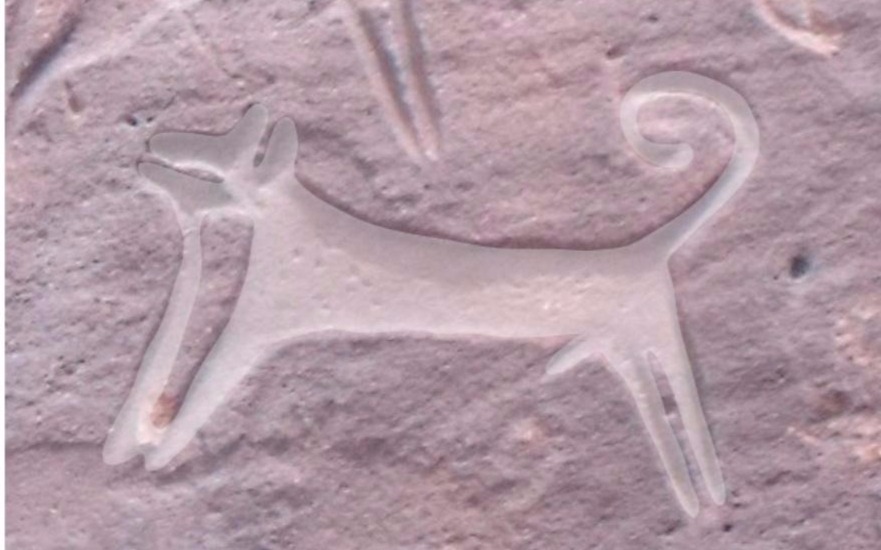
ancient dog carving from Saudi Arabia

19 September 2022

Moses' poem about life's brevity and futility (Psalm 90)


With its introductory note, Psalm 90 is placed in the context of Moses’ life, you can easily see how Moses could write a psalm like this as he lived to watch nearly all of the adults around him age and die in the wilderness. The brevity of life and its difficulty and the wrath of God must have often seemed very near to him.

As I read this beloved poem again this morning, I was struck by themes that echo within it, like mortals' troubles and divine responses. As you can see in the diagram, it seems to me that the first 2 verses form a sort of introduction of praise establishing the setting of God’s eternality or existence beyond the clutches of time. In verses 3-4, humans’ return to dust is mentioned and given as a command; this is matched in verse 13 by a call for God’s return, and both are followed by a concern for length of time.

Following that, there is the issue of being swept away in the temporary, dreamy, impermanent joy (of life’s morning) followed by the fading, withering sorrow of the evening, in verses 5 and 6. The response to this in verse 14 is that the Lord who is our dwelling place can satisfy us not only in the morning, but also the whole day long with joy.

Verses 7 to 11 directly bring out the theme of God’s anger and our unhidden sins, and we learn that the brevity of our lives is connected with these points. (In my opinion, the KJV translation draws out the emphasis in verse 10 on the extreme brevity of mortal life better, reflecting the Hebrew as ‘the days of our years’. In other words, even if  we count each individual day of all of our years, life’s still naturally going to end very quickly and sadly.) The response to this in verse 15 is that the Lord can give gladness to offset the affliction and evil of many days and many years.

Finally, there is a response to the ‘toil and trouble’ of verse 10 at the end of the poem (verses 16 and 17). Instead of us wasting our energy in meaningless, quickly-ended toil, may the Lord work on behalf of His servants. (Isn’t that beautifully backwards!) Beyond that, God’s favor can turn our toil and trouble into meaningful work.

The psalm hinges on 2 points in this way of organizing it. After the foundation of God’s immovable reality outside of our temporal troubles and our living within the Great Reality has been laid, verse 12 summarizes the first part of the psalm by asking that God teach us to count each day in order to gain wisdom through acknowledging life’s passing nature. Such an awareness of our mortality and futility can lead us away from futility. Secondly, in verse 17, we find that the favor of our Lord can reverse life’s futility and actually establish the work of our hands! Life can not only be joyful; it can also be meaningful when the Lord’s face shines on us. What stunning grace!


NOTE: Not all the psalms end in such a happy resolution; for example, Psalm 88 does not exude any explicit hope, at least when considered on its own. 

28 July 2018

SIT in the woods

  Sometimes the metaphorical words of the prophets are literally true. "He leads me beside still waters; he restores my soul."


  As I continue my TESOL studies at SIT Graduate Institute in Vermont, I felt the need for some quiet and aloneness this morning and went for a walk. I have a conference presentation to prepare, but first some internal re-balancing was needed.

the beavers' home and their gnawed tree trunk
I missed the dam the first time I stood beside it but noticed it on my return. 

   A turtle friend, in the middle of the path, was the first creature to draw me into this less-humanized environment. 

  After that, there was a continual stream of critters and creatures proclaiming a beautiful world that does not require mechanical noises and busyness and digital connectedness to display its reflecting glory.  The splashing leaps of a deer from the pond, the sudden, unexpected twinkle of a goldfinch springing from spot to spot into the distance, the dew on the woven webs of spiders, and the fascination of seeing a bird which I couldn't identify - all these were restorative and quieting.


the bumblebee and its clover
the monarch in a momentary resting spot

  Nature with all her beauty is a gift, though the greater gift is the friendships and mentorship of the beautiful people from the far corners of the world who come to this school to learn and grow and share together. 


  To paraphrase David, it is certain that goodness and steadfast love will pursue me every day of my life until I dwell in the Lord's house forever.


02 April 2017

Grief and Songs, as strangers

 Recently, I have been spending a good bit of time meditating on the question posed in the middle of Psalm 137, both from that psalm and from the book of Daniel: "How shall we sing the Lord's song in a foreign land?" Having lost everything, having been taken into exile, and having arrived at the place to where the they were being forced, the question is being raised. The ones who murdered the exiles' children, raped the women, destroyed and desecrated the temple, and burned their city are requiring that they songs of Zion: the grief is fresh, "Is it even possible to sing the LORD's songs here, after all that?"

 It seems to me that Psalm 137 gives two answers, while Daniel suggests a few more which I may post about later. Psalm 137's two solutions are both 'remember': the exiles must not forget where they came from - remember their origin, their God-given home. If they do that, then the songs of Zion may still be sung. The second solution is that the LORD Himself is to remember the injustices enacted upon them, those who gloried in their being massacred. These solutions are understandable for those who believe in the Psalms today, too.

 It has been said that our modern culture does not mourn or grieve well. That makes me wonder if that is why the themes in this song seem difficult to find put to music in English well. Here's a variety of audio versions of the psalm:

This may be the nicest of the Christian versions of it that I found. It's biggest downside is that it doesn't stick directly to the words of the psalm .

This Anglican chant solves that problem, but the style is a bit difficult for me.

Here's a Yiddish rendition, which seems to carry the tone well though obviously I can't understand it.

This Rastafarian version is catchy, but it only catches part of the psalm - and I'm not clear enough on the Melodians's cultures to know whether this is a style of grief: it seems quite possible.

12 September 2016

The Closing Blessing's (Benediction's) ancient purpose

Regarding Israel's worship, during the Old Testament period:

A part of every gathering of the community was the blessing with which they were dismissed. This should not be thought of as merely a solemn concluding ceremony; the entire service of worship was concerned with blessing. When the priest at the conclusion pronounces Yahweh's blessing on the community, he does it so that all those who are scattering to their own homes may take with them the blessing of God that has characterized the entire sacred service. The psalms of blessing show this clearly.

- Claus Westermann,  Blessing in the Bible and the Life of the Church, pg 37.

  As I have studied, the biblical theology of blessing, Claus Westermann and James McKeown have been the two authors who have been most helpful to me in their various writings. This excerpt seemed particularly relevant and clear beyond it's context within the book.

27 August 2016

Roaring Waters (Şile) & Robed Majesty (on High)


  I may blog some highlights from our time visiting Şile with family. However, the waves provided insight into  passages of Scripture which have never stood out to me before: the ones about the roaring of waters and the charcter of God. Then, I 'stumbled upon' the psalm below. I'll include my two observations as captions for the pictures.

The roar of the waves is constant and unfading, only our consciousness of it fades.

            The LORD reigns; he is robed in majesty;
                        the LORD is robed; he has put on strength as his belt.
            Yes, the world is established; it shall never be moved.
            Your throne is established from of old;
                        you are from everlasting.
           
            The floods have lifted up, O LORD,
                        the floods have lifted up their voice;
                        the floods lift up their roaring.
            Mightier than the thunders of many waters,
                        mightier than the waves of the sea,
                        the LORD on high is mighty!
           
            Your decrees are very trustworthy;
                        holiness befits your house,
                        O LORD, forevermore.

                       (Psalm 93 ESV, emphasis added)

Before the roar of the waters, minor sounds fade or disappear. 

23 July 2016

The Honor Competition

  Have you ever considered this command? 'Outdo one another in showing honor.' (10) It is one of a series of commands in Romans 12; and a bit later in the chapter comes this, 'Repay no one evil for evil, but give thought to do what is honorable in the sight of all.' (17) And, in the next chapter, concerning the governing authorities, it is written that Christ's followers are to give 'honor to whom honor is owed.' (13:7) Finally, Romans 16:1-2 gives the receivers of this letter of Paul's to put this into practice: 'welcome [Phoebe] in the Lord in a way worthy of the saints.'

  How can we put this command into action in our own lives? How do we excel in honoring those around us? This is Gospel inversion, competition turned on its head: compete to make someone else the honored one; try to be the best at putting everyone else's advancement ahead of your own.


(cf: 2 Cor 8:21; Ps 15:4)
An example of giving a teammate honor:


Or, another example that I couldn't embed.

30 March 2016

The Psalms are messianic

A logical extension of the belief that all the Scriptures point towards the Christ is that each of the Psalms is Messianic, not just some of them.  Still it is remarkable the number of Psalms which are directly related to Christ in the New Testament.

 As far as I have been able to find, there are at least 20 of the 150 Psalms that are directly referenced in the New Testament as being related to Jesus Christ. There are several other likely or possible Messianic references as seen in the chart below.

Psalm Verses References Verses References Verses References Verses

2
1-2 Acts 4:25; (Rev 19:19) (6) (Rev 14:1) 7 Acts 13:33; Heb 1:5; 5:5 9 Rev 19:15; (2:27)
8
2 Mt 21:16 4 - 6 Heb 2:6-8; 1 Cor 15:27


16
8-11 Acts 2:25-28, 31; 13:35


18
(2) (Heb 2:13b)


22
1 Mt 27:46; Mk 15:34 18 Mt 27:35; Jn 19:24 22 Heb 2:12


31
5 Lk 23:46


34
20 Jn 19:36; (Ex 12:46)


35
11 Mt 26:60 (allusion)


40
6-8 Heb 10:5-9


41
9 Jn 13:18 10 MESSIANIC?


45
6-7 Heb 1:8-9


68
18 Eph 4:8


69
4 Jn 15:25 9 Jn 2:17; Rom 15:3 21 Acts 1:20 25 Acts 1:20
78
2 Mt 13:35


86
(6) (Jn 10:34)


89
3-4, 35-36 Acts 2:29-30


91
11 - 12 Mt 4:6; Lk 4:11-12


96
(13) (Rev 19:11)


97
(7) (Heb 1:6)


102
25-27 Heb 1:10-12


109
3 Jn 15:25 8, 17 Acts 1:20; Jn 17:20


110
1 Mt 22:42; Mk 12:36; Lk 20:42, 43; Acts 2:34-35; Heb 1:13 4 Heb 5:6, 10; 7:17, 21 (5-6) (Rev 6:15-17)


118
22-23 Mt 21:42; Mk 12:10-11; Lk 20:17; Acts 4:11; 1 Pet 2:7 25-26 Mt 21:9; Mk 11:9; Lk 13:35; 19:38; Jn 12:13


132
11 Acts 2:29-30


A beautiful depiction of the interlocking nature of the Bible's text is available here.


The chart above as an image:


Kindly message me if you see any errors in the chart!
Related post: on the use of the OT