...observations and ramblings from a learner and traveler...

Showing posts with label Speculations. Show all posts

08 November 2020

Imagining the Creation before the World's Creation - The Silmarillion, Chapter 1

   If you've read my blog or we've talked much, you may recall some of my theological speculations (sample 1, sample 2, sample 3). There's lots of areas for wondering in Scripture, many things that are hinted at, but not detailed. It is along these lines that J. R. R. Tolkien's first chapter in The Silmarillion is so gripping. 

 Middle Earth is neither a Christian allegory nor even a theologically correct construct of 'the real world'. There are elements in it that differ from what we might call a 'biblical' worldview; however, it seems to me to be a thoroughly Christian worldview. Middle Earth is a place where the creative mind that has been saturated with the possibilities latent within the world we see and the revelation that has been given to us can run free. 

  Thus it is that in the first lines describing the dawning of the reality in which Middle Earth will later occur, we find Eru, the One. Then, follows a chapter filled with what the imagination can suggest happened before the Beginning, when God created the heavens and the earth. It is a consideration of what might have been when 'the morning stars sang together... for joy' or when a son of Dawn said, "I will make myself like the Most High" (Job 38:7; Isaiah 14:12-14). It is in no way an exposition or interpretation of those passages, simply a fantasy of what might have been before our own dawning. It considers how the One knew that a darker theme would enter the Story  through pride and increase the majesty within the music, never denying the Composer one iota of the glory of His composition. Instead, setting theme against theme, the Subverter would amplify the Creator's own harmonies.

  I'd highly recommend these 10 pages of a novel as a meditation for the Christian mind. Imagination is a gift from the Creator, and Tolkien was a gifted imaginer. 

28 July 2019

Is All Sin the Same? or Are Some Sins Worse than Others?

Is there Greater and Lesser Sin?

  Over the years, I have periodically posted theological musings that are rather speculative. When I do so, I try to label them as such. I distinctly remember John Hartog's guest lecture in my sophomore class on Romans in which he discussed Abraham, his faith, and eschatology while being clear that some of his ideas were speculative. This made the lesson quite interesting; and as I recall, his basic speculation was whether Abraham would be physically raised to walk on this earth given the promises that God would give him the land. This post should not be that speculative, but it is certainly more a musing than a statement.

 You may have heard someone say, "All sin is equally bad"; you might have even said it yourself. But is it true according to the Bible?

 Here are some initial Scriptures to consider: Leviticus 4:2, 13, 22, 27; 5:15-18; Numbers 15:22-31; Proverbs 21:27; Ezekiel 8:6, 13, 15; John 19:11. Click this link to read the verses. Spread throughout the Scriptures in the Law, the Writings, the Prophets, and the Gospels, these passages certainly seem to suggest that some sins are more serious or worse or greater in some way than others. A leadership role (cf. James 3:1), motivation, and amount of knowledge seem significant in God's weighting of sins. For instance, consider what Numbers 15 shows below:


 From these passages, it seems clear that not all sins are the same. Still, someone might object that while all sins are not the same, they all still deserve the same judgment due to God's just wrath. Certainly, all sin dishonors the Creator God of the universe, separate us from Him, and can justly be punished by Him. However, the Bible does not seem to portray all sin as deserving the same degree (?) of judgment. Lamentations 4:6; Matthew 11:20-24; Mark 12:38-41; Luke 20:45-47; Hebrews 10:26-29; James 3:1 (link), as well as the details of the Mosaic sacrificial system, point to varying levels of judgment as being appropriate to varying sins. I do not mean to suggest that God is not angry at some sins; instead, I think it might be appropriate to say that some sins are more grossly and deeply offensive than others.

  This suggests the question whether all sinners are equally evil and equally deserving of judgment. That is a very different question, which I don't intend to go into in detail. However, I think the simple answer is that rejecting God's revelation in nature, Scripture, and/or His people and preferring our own way is the root sin of all sinners. Thus, we are all equally sinners separated from God whether the weight of our individual sins and their respective appropriate judgments are equal or not. 

  In summary, we must realize that God does not necessarily evaluate sins in the (constantly shifting) way that human cultures do. Ingratitude is a major sin in Scripture (Numbers 21; 2 Timothy 3:2), as is disobedience to parents. Thus, a Scripturally-tuned conscience and set of evaluations is needed for these topics. At the same time, all sin, no matter how small or large, is abhorrent to the holy God and should be as abhorrent to us. 

 Do you have any thoughts or additional texts to mention?

Additional texts to consider:
~ Romans 1:18-32 begins with God's wrath against ALL ungodliness and then describes some of the different developments and aspects of sin.
~ Luke 7:36-50 seems to suggest something about both quantity and weight of sin committed by different individuals in both the parable and the subsequent comments by Jesus.
~ Matthew 23:23 seems to suggest that some good actions are more significant than others. We can wrongly evaluate positive things we do as well.
~ Matthew 12:31 - the unforgivable sin against the Holy Spirit
~ 1 John 5:16-17 - the sin that leads to death 
~ Matthew 5:17-22
~ John 15:22-24
~ 1 Corinthians 14:20 - be infants, not mature in evil.

01 May 2013

Child-training, without a Fall

 As I have been pondering child-training again, I have considered what it would look like to have raised children in Eden. Obviously there is a certain amount of speculation inherent in considering a 'what if'; but in this case, we have some information to build on.

  1. The Garden (and the Earth) were always meant to be filled with children and people (Gen 1:28).
  2. The only perfect child ever actually born was Jesus, and He was born into a fallen world, so He dealt with things that would not have existed in a sinless world (Heb 4:15; 7:26-28).
  3. Jesus had to mature as a human being (Luke 2:52).
  4. Jesus learned obedience through His suffering (Heb 5:8). Also, Adam and Eve obviously needed to learn obedience even in a sinless world; they failed to, at least initially.
  So, on a sinless earth, child-training would still have been necessary; children would not have been born mature... which doesn't even sound nice.  It might even have been necessary to teach children obedience, though that is completely speculative.  I would imagine from Genesis 1 and 2, as well as the rest of Scripture, that the areas of training for sinless children would have been concerned with loving God wholeheartedly, loving the people around you as yourself, and loving/ruling the land God has placed you on/in.  All of that still seems to be necessary and appropriate today.
  So, what was added to parents' responsibility at the Fall?  The basic change seems to be that now children will have to fight Sin and the effects of the Curse and Death from both inside and outside.  The positive side of teaching God's laws and ways did not necessarily change, and those are emphasized in Scripture.  But, I think those things would have been true in a sinless world.  What changed was that now the parent must fight his own sin nature, not provoke the child's inclination to sin, and train the child to fight their sin (Eph 6:4; Col 3:21).  I don't think that stretches these passages.  A final change would be that the parents are to aid the child in restraining and warring against his or her sin.  Solomon's Proverbs speak of that, which is another aspect I am studying.
 What I've found helpful in these thoughts is that it delineates my areas of responsibility as a parent.  It also makes it clear that I could successfully train my child in some areas while basically failing in others. For instance, I could teach them to love the place in which they have been placed without teaching them to love and listen to God.  Or, conversely, I might train them, by grace, to love God yet neglect to teach them to love the land in which they have been placed.  Of course, my brokenness will ensure that I cannot train them perfectly, but I hope that in grace I will continue learning and growing to train their hearts, minds, and strength better.

12 July 2012

The Mountain of the Lord - an eschatological speculation

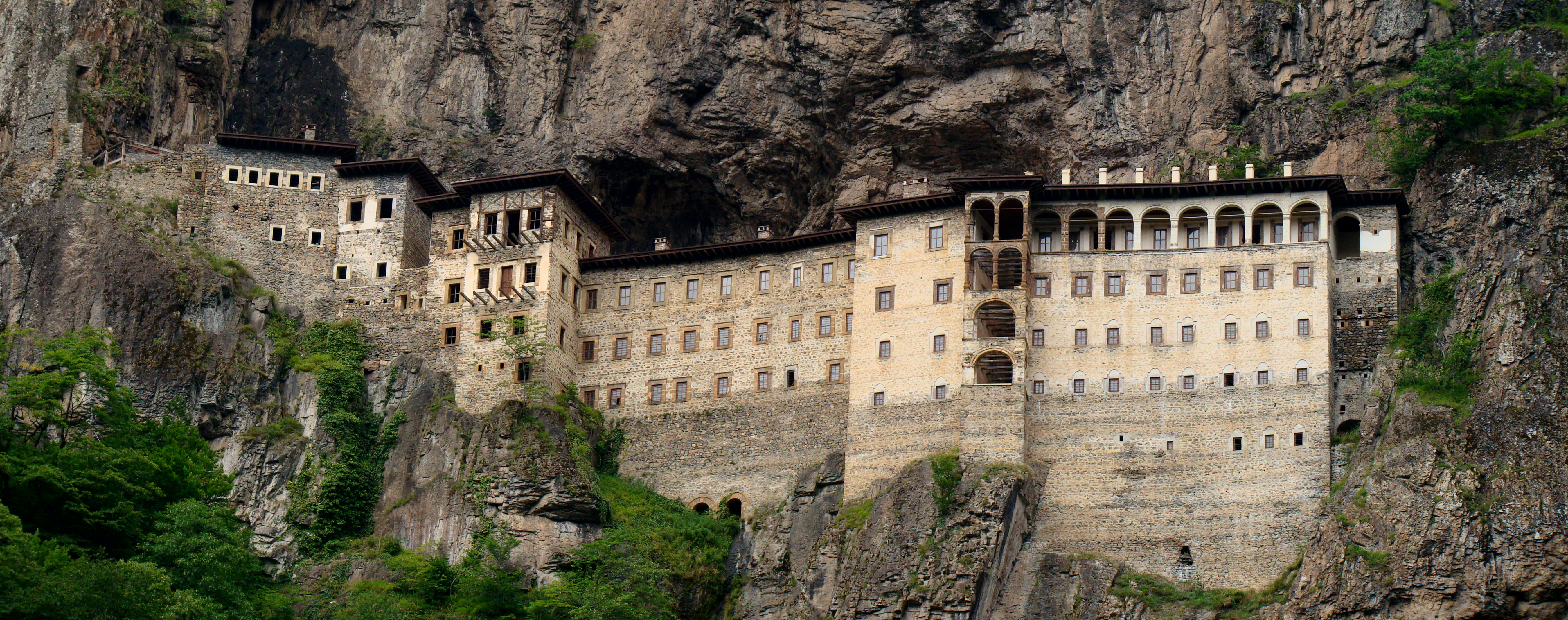
  I read the beginning of Isaiah 2 this morning and was struck by the way the God's temple is described: it is described as if it could literally be a Temple Mountain or a Mountain Temple... as if this great temple from which God will teach and judge the nations might literally be built into a mountain or carved from a mountain, a temple that would be by earthly measures worthy of the God worshipped there and the King served there!

 So, I looked around to see what the best mountain temples currently look like.  None fit the image in my mind, although some are impressive.  I'd love to see someone draw a magnificent imagined Mountain Temple.  But for now, here are the best mountain temples I could find...


Honorable Mentions:
(Petra's temple wasn't built into the mountain apparently.)