...observations and ramblings from a learner and traveler...

Showing posts with label Literature. Show all posts

03 September 2025

The Name of the Rose & Saints and Sages

  About 3 weeks ago I began reading for ISRME's current class that I am taking, Saints and Sages. In it, we considering Muslim and Christian thinkers and doers many of whom I was familiar with in a very limited sense or not at all. Even most of those I was familiar with (Thomas Aquinas, Rumi) I had read little to none of their work. As with all of ISRME's classes, this one has been excellent.

  At nearly the same time, one of my daughters decided to get Kindle Unlimited for a few months. (It cost a dollar, I believe.) So, I checked my wishlist to see what books I might want to peruse for free. I didn't come up with much. Except The Name of the Rose by Umberto Eco. Which I didn't know much about but had had highly recommended to me. So, I tried it. It's set in exactly the same time period and engaging many of the same ideas and authors - one character whom I assumed was fictional turned up in my reading about Catherine of Siena. An excellent coincidence in reading materials!

  A medieval, philosophical detective novel set in an abbey whose burning heart was a library! Multiple murders, inquisitors, and... VERY long discussions of philosophy and theology and medieval stuff that seemed a bit long. It was really good and kept me reading to the end, even if I skipped portions of the extended discussions.


  But the unexpected bonus benefit came after the very end! More than 500 pages in, in the author's postscript which was appended later, he speaks of writing and the writing process, and it's very insightful and gripping, at least for someone like me who tries to read about writing each year since I am tasked with teaching so much of it. Let me give you an example, which intersects with the story itself - no spoilers, though.

"Thus I rediscovered what writers have always known (and have told us again and again): books always speak of other books, and every story tells a story that has already been told."

  This is true. Even within the postscript Eco has mentioned Poe's Philosophy of Composition, which I was unfamiliar with. Now I've downloaded it as another resource for learning and for sharing with writing students. But the magic... the magic is that Eco has used this insight within the narrative itself, books speaking of books. 

  By the way, it feels to me like a very European novel; the ingenious mixing of languages used in the text - and often unexplained - expects the reader to grapple with languages without fully grasping all of the meaning consciously. It's hard to imagine an American in America writing this, too little necessity for linguistic survival strategies. 

A few final quotes...

"Have you found any places where God would have felt at home?" 

"He is, or has been, in many ways a great man. But for that reason he is odd. It is only petty men who seem normal."

"I lacked the courage to investigate the weaknesses of the wicked, because I discovered they are the same as the weaknesses of the saintly."

"The simple cannot choose their personal heresy."  

22 September 2024

Hopkins' 'Peace' - "That piecemeal peace is poor peace!"

  I was introduced to lots of poetry when I was young, and I memorized a good bit of it too, both by choice and due to curricular requirements. However, it's only been in the last few years that I have begun to appreciate more complex verse. Bits of T. S. Eliot's Four Quartets wooed me (Trying to learn to use words, and every attempt... OR The wounded surgeon plies the steel...) and drew me into that set of poems. Now a book of Gerard Manley Hopkins' work has been [kindly] thrust upon me. It's often complex to the point of feeling incomprehensible at first, and yet... there's something there. This one, 'Peace' felt meaningful today, both personally and globally.


Peace

When will you ever, Peace, wild wooddove, shy wings shut,

Your round me roaming end, and under be my boughs?

When, when, Peace, will you, Peace? I'll not play hypocrite


To own my heart: I yield you do come sometimes; but

That piecemeal peace is poor peace. What pure peace allows

Alarms of wars, the daunting wars, the death of it?


O surely, reaving Peace, my Lord should leave in lieu

Some good! And so he does leave Patience exquisite, 

That plumes to Peace thereafter. And when Peace here does house

He comes with work to do, he does not come to coo,

He comes to brood and sit.

14 January 2024

2023 Reading (13th annual edition)

  The year 2023 likely equaled 2022 in being basically unprecedented in my life for breadth and extent of reading. The combination of access to a great library system with fabulous inter-library loan opportunities and taking sabbatical time gave both time and space for constant reading, especially early in the year. I have highlighted a few particular recommendations, but the only ones that I would not suggest have been clearly labeled as such. I've weeded out the ones that I didn't care to bring up.

NON-FICTION

Walking on Water by Madeleine L'Engle - Recommended to me by Andrew Peterson's Adorning the Dark, this is another beautiful reflection on godly work. Like Peterson's book it masquerades as a book on art and faith. Really all work done well seems to be a combination of 'science' and 'art'; writing, or art, is no exception. L'Engle argues that all good art is good religion, bad art is bad religion. A profound book. 

First I checked it out of the library; but about a chapter in, I bought it so that I could mark it up. I read it in parallel with Wrinkle in Time series, including Many Waters and An Acceptable Time, each of which I enjoyed for the first time.

Manana by Justo Gonzalez - a commentary and critique not only of "Western" (actually, "Northern") theology but also of its culture from through a Hispanic lens. This is an older work now but maybe even more insightful because the issues he mentions have in many cases grown clearer over time. (earlier post on the book)

Return of the Prodigal by Henri Nouwen - It'd be hard to express the impact of this book on me. It was beautifully expressive of the Good News of Jesus; it was deeply thought-provoking. When good friends give you good books as gifts, it's always best to read the... but at the right time. This one had to wait for about 4 years, and then it was the right book this past spring. 

Empire of the Summer Moon by S. C. Gwynne a book I definitely intend to complete someday, but I found out I could loan it from Turkey, so I returned it to finish later. As far as I got was riveting! I also found

Mother of Royalty: An Exposition of the Book of Ruth in the Light of the Sources by Yehoshua Bachrach - a post with my thoughts

A Call to Istanbul by Constance Padwick - This is a lovely biography of a Canadian man born and raised in the Ottoman Empire who later returned and led the work of the Bible Society in Turkey and Lebanon. I'd never heard of him, but he lived and loved many of the same places that I do. His love for all people, but especially those of Turkey, was beautiful to read about.

Becoming Brave: Finding the Courage to Pursue Racial Justice Now by Brenda Salter McNeil - I previously posted some excerpts from this, and it was a beautiful read, simple in some ways and rich in others.

The Prophecy of Isaiah by Alec Motyer - This has been a great resource as I studied in Isaiah!

Fly by Wire by William Langewiesche a quite good, but not great, book about 'the Miracle on the Hudson' as well as a consideration of a lot of different aspects of the airline business and lifestyle

A Habitual Sight of Him: The Christ-Centered Piety of Thomas Goodwin (edited by Beeke) - This was a really nice little book that is easy to use as a daily devotional (35 readings).

I'm Still Here by Austin Channing Brown, Pollution and the Death of Man by Schaeffer (previous post); The Call of the Minaret by Kenneth Cragg (previous post); The Teacher by Augustine (previous post); Birlikte Yaşam / Life Together by Bonhoeffer; 15 Commitments of Conscious Leadership; Troubled by Truth by Kenneth Cragg; The Master: A Life of Jesus by John Pollock; Sacred Companions by David Benner; Jesus' Sermon on the Mount by D. A. Carson

FICTION

Shane by Jack Shaeffer - I enjoy Westerns. This one became an instant favorite. It's well-told; it's got a unique perspective. It was both gripping and left an element of mystery. 

Daddy by Loup Durand - oops, lost a library book!

Harry Potter - One of the joys of fathering is sharing the joy of reading and being shared with. My oldest daughter and I are each making our way through Hogwarts for the very first time. We're doing it together.

A Cast of Stones and sequels by Patrick Carr - I enjoyed it and will eventually re-read it. Sadly my least favorite part was probably the last chapter.

Goodbye Mr. Chip by James Hilton - When I went looking for a short novel about teaching for my Reading Skills I class, this is what I came up with. It had some challenges, but overall we enjoyed it.

Zahrah the Windseeker by Nnedi Okorafor-Mbachu

The Golden Rendevous by Alistair MacLean - How was there a book by one of my favorite older authors that I had never read?!?! Anyways, it ws typical MacLean; if you've read enough of his works, there was nothing shocking even if there was a bit of variety.

Never Let Me Go by Kazuo Ishiguro - I couldn't love it, but it was interesting and well-written. It's just not my preferred genre.

Serpent of Moses by Don Hoese - a sequel to an interesting Christian fiction book I read years ago. Another Indiana Jones-style book...

Recommendations from years past: 2022, 2021, 2020, 2019, 2018, 2017, 2016, 2015, 2014, 2013, 2012, 2011

15 September 2022

Children of the Alley - thoughts and quotes

  In our ISRME book club, we just finished discussing Naguib Mahfouz's Children of the Alley this week. It's an interesting book, and it might help you to know that it is an allegory before it starts. I didn't figure that out for over 150 pages. Then things started making more sense. 


 The book  considers a variety of themes related to life and religions (and their similarities and differences). These include our human addiction to numbing ourselves against reality and a regular returns to the question of injustice and why the Almighty does not intervene with it more directly. As well, the book seems to me to have a special focus on the human desire to 'return to Eden', though of course that's not the way it's labeled. In the quotation below, 'the mansion' is that allegorical equivalent for an Edenic closeness to beauty, rest, and the divine.

 If the past could be forgotten, the present would be wonderful, but we will keep on staring at that mansion, which gives us the only glory we can claim, and causes all the misery we know.

There is also an interesting progression of thoughts about the nature and place of work in human life:

Working to eat is the worst curse of all.
...

Then [Adham] yawned more deeply. “Work is a curse!” 

“Maybe so,” whispered Umaima, “but it is a curse that can only be defeated by more work!

...

Arafa’s eyes were bright and he spoke intensely. “But leisure isn’t the ultimate goal! Imagine spending your life free and at leisure. It’s a beautiful dream, but it’s so ludicrous, Hanash. It would be so much better to be freed from work so that we could work marvels.
...

“So why are you so hard at work?” 

“Because work is all I have,” Arafa sighed.

One final tidbit...

"But every tragedy, however great, eventually becomes a mere fact of life."

08 August 2022

God as the narrator in Judges?

"Above all, it is time to recognize that the narrator [of Judges] is aligned to such an extent with YHWH that we are drawn to the inevitable conclusion that they are one and the same." (pg 188) 

 How does the above quote strike you? It seems to resonate with the biblically conservative belief that Judges is the actual words of the God of Israel. And yet, it is in the final paragraph of an article in The Oxford Handbook of Biblical Narrative which draws on a variety of not-conservative theories or sources, (which is certainly not inherently negative). Along with various feminist sources, the author Deryn Guest writes an analysis 'where narrative criticism is also informed by queer theory, psychology, and the study of masculinities.' (186) The above quote is followed by these two sentences which end the article:

"YHWH's agenda is the narrator's agenda. The narrator/YHWH can evade scholarly critics no longer."

 Thus, as I understand it, Guest is not so much suggesting that God condescended to communicate with humans, but rather that humans have identified themselves with God or a god of their own imaginings in Judges. So, while the first quotation caught my attention for the way in which it was expressed, actually the author is suggesting that YHWH may (must?!?) actually be subjected to scrutiny; God may not remain 'inscrutable' in Guest's words. In fact, this perspective was made explicit in the title of the article, "Judging YHWH in the Book of Judges."

  But, what to do with this? Of course, believers in the Bible as God's Word must consider the actions and expressed words of God deeply. Yet, if the Maker of the Universe is actually as the Bible reveals him*, then our capacity for understanding must necessarily be limited. Those who cannot fully understand/grasp even those things of the creation that we know exist (e.g. the extent of the universe, quantum physics, or whatever the future frontiers of knowledge are) may certainly ask questions of the Creator, but can hardly stand as his judges. But, this isn't a new problem, is it? Isaiah talked of how the clay cannot back talk to the potter simply because it doesn't like things as they are. The biblical authors also wrestle frequently with the problems of pain, grief, and (delayed) divine judgment. Such questions seem to be okay, but in the biblical text, a line seems to be crossed if we move towards 'judging' God, when our 'why' turns to a 'how dare you!' 

 Interestingly in comments made about 'commentaries written with a believing audience in mind', the author seems to acknowledge that really the article was not meant to be beneficial for those who believe in the Bible as God's revelation (184). This dovetails with my own thoughts that the primary, though not only, benefit of the article is in a better understanding of those who do not see the Bible as divine revelation.


*If you are bothered by my use of 'his' when referring to the One who made all things, the Bible is quite clear that God does not have gender while also using masculine pronouns to refer to that One. This may seem like a linguistic tic since some languages don't distinguish gender in their pronouns, but in English, the choices are limited as they were in the languages the Bible was written in. This in many ways is a microcosm of the larger issue: we are talking about the infinite and divine in words that are finite and human; there is some necessary ambiguity which is caused by the limits of our knowledge, languages, abilities, and perspectives. So, we are left with what we were given and the call of faith is to be satisfied with it, at least for this life.

26 February 2021

on Books and Reading - encountering Andrew Peterson's thoughts

  I have really been refreshed and gladdened by Andrew Peterson's book, Adorning the Dark (with the inexplicable exception of chapter 6). There is much to appreciate in this memoir-philosophy of life and art. For now though, I just want to comment on two statements he makes about reading and books.

Too often we retreat into the pages of our longing only to return disconsolate to the kitchen or the classroom—we’re escaping from and not to.” (66)


  This first comment (and the chapter that precedes it) hints at my reality as a teenager; it describes when books were my refuge in a sense that was nearly ultimate. One of the most significant spiritual battles in my life was quitting a particular book - and series - because of the way it was dominating my time one summer. Books are a beautiful escape unless they become Ultimate; then they can become a prison so lovely that we may not even recognize our cage. 


[These novels] strike me as a way to pass the time rather than to enrich it.” (66)


  When I was a child, we had a category of books called "Purple Door" books because of a particular book that my sister and I loved so much that we convinced my mom to read it in her rare and valuable reading time. She didn't love it so much. She explained to us that it would never be a classic even though it was a nice read. That categorization has stuck with me ever since. Here Peterson defines that category exactly: 

12 November 2019

Tolkien, on the wide world and fences - an elf to a hobbit

 I'm re-reading The Lord of the Rings again (Yes, re-reading again, not the first re-read.) Anyways, this quote to the hobbits by an elf as the hobbits venture into a world that scares them and which they hate to avoid was striking.


The wide world is all about you: you can fence yourselves in, but you cannot for ever fence it out.
~ Gildor Inglorion, as quoted by J. R. R. Tolkien

02 January 2019

2018 recommended reading

This year's list of top books from my 2018 reading is as eclectic as ever. A number of the books come from my masters studies in teaching English; others come from my reading to my children, and still others are from my reading for enjoyment or learning, which are often the same thing.

Theological

Family of Pi in Matthew & Reliability of Our New Testament by Russell N. Champlin - These two works were written by a distant relative whose other major publications were in Portuguese. He died this year, but I benefited from his firsthand work with the Greek manuscripts which form part of the textual legacy of the New Testament. The first work is his PhD dissertation; the second is a booklet which he wrote to present the evidence for the New Testament's reliability for non-scholars.

Historical 

John Adams by David McCullough - This book had been waiting in my reading list for quite a while, and it lived up to its reputation. It gave fascinating insights not only into America's second president, but also into the time period in which he lived. A man of the soil in ways that many of America's (famous) early nation builders were not.

Means of Escape by Philip Caputo - This was a gift to me last Christmas; and as the giver has never given me a book I did not enjoy, I gladly read it though I would not have bought it for myself and had never heard of it. It was worth it! It ranges all over the modern world and era as the author relates episodes from his work as a journalist while also managing to turn his story into a narrative.

Teaching English / Education

The Grammar Book by Diane Larsen-Freeman & Marianne Celce-Murcia - My only regret with this book is that I did not spend the money to get the most recent edition when I purchased this. In another context I commented about the book as follows, "I am beginning to associate Diane Larsen-Freeman’s name with the highest quality of materials. As I have explored chapter 33 on “Reported Speech and Writing,” the breadth and depth and level of detail in the chapter was phenomenal, and very useful. Nearly every page of my book has new markings, many with whole paragraphs of key information." The only other grammar book that I feel about like this is Murphy's English Grammar in Use, which has a completely different, and rather minimalistic, approach.

Other People's Children by Lisa Delpit - I have not yet posted about my takeaways from Delpit's book; this is because there are so many of them, not because they are in any sense lacking - and I haven't even finished it yet. It's worth any teacher's/educator's time.

Türkçe ve İngilizce Açıklamalı English Grammar by Seven and Seven - This fascinating work is written by two Turks as an English grammar with explanation in both English and Turkish. As such, it contains fascinating insights and is useful in some unexpected ways.

Second Language Acquisition by Rod Ellis - This is a solid overview on how additional (aka "second) languages are acquired. (previous post)

Fiction

Barbarossa by Iskender Pala - I have not quite finished it yet, but this book has been a fascinating and surprisingly positive journey across the Mediterranean world of the 1500s. This would be a great read for someone who wanted to venture into another nation's literature and worldview.

River of Death
 & The Dark Crusader by Alistair MacLean - I enjoyed these two books by MacLean; I thought I had read all his works but was pleasantly surprised to find that I had no memory of these two, though they do not rank with his great classics.


Children's

Last Stop on Market Street by Matt De La Pena - This was a book that was quietly beautiful; its message was not flashy. Rather it allowed its message to develop and be powerfully latent within the story and the illustrations without finding it necessary to verbalize it explicitly.

The Quiltmaker's Gift  - This book is another example of exquisite illustrations complementing a deeply-told story. The 'moral' in this story is somewhat more explicit, but it is not preachy. While there is no suggestion that it is "Christian" in the book itself, I feel the story harmonizes at a quite deep level with the message of Jesus.

Songs & Artists

Song: "Awesome" (artist: Charles Jenkins)

Group: The Gray Havens (song - "The Train Station")


Recommendations from years past: 2017, 2016, 2015, 2014, 2013, 2012, 2011

09 February 2018

a witness to beautiful

"Sometimes when you're surrounded by dirt, CJ, you're a better witness for what's beautiful."

CJ saw the perfect rainbow arcing over their soup kitchen. He wondered how his nana always found beautiful where he never even thought to look.

from Last Stop on Market Street by Matt De La Pena

  This is one of those kids books that has depth in the illustrations as well as the content. It was just given to us, and I like it much more than I expected to - knowing nothing about it till I picked it up. I'd highly recommend it.

12 January 2018

Norse Mythology and Christology

 When I was young, I loved Norse mythology; it occurred in a fascinating world of gods and giants and men and dwarves. Thus, not long after getting my Kindle, I downloaded a collection of Norse tales for free, but I'd never gotten around to reading them. So, they'd sat in my 'read next' collection for a long time. Since I haven't had anything else that I felt like starting in the last week or so, I've been wandering my way through the tales of Asgard and Midgard and Jotunheim again; it has been fun reading both familiar and unfamiliar tales.

 A friend recently commented to me that given the nature of these sorts of ancients myths and the intelligence of the tellers, we should probably accept such mythologies in the non-serious, enjoyable way they appear to be written, not as the 'religious' texts of the ancients. They seem much more like our modern superhero tales, which also incidentally include Thor and his hammer.

 Anyways, tonight, I came across the quote below,

Two only went on another way—Odin, the Eldest of the Gods, and Loki the Mischievous. 
Loki and Odin laid aside all that they had kept of the divine power and the divine strength. They were going into the World of Men, and they would be as men merely.
- Colum, Padraic. The Children of Odin The Book of Northern Myths (p. 69). 

 For those who think in terms of Jesus' kenosis, his self-emptying or making himself nothing, this is an interesting literary event. Loki and Odin have their own version of emptying themselves of their deity. Yet, they went as 'men merely'; Jesus came as 'the Messiah, the Son of God,' no longer grasping his divinity but not merely a man. It would be of some interest to know the age of these tales which Colum published in 1920.

 Also, incidentally, in this same tale, "The Dwarf's Hoard, and the Curse that it Brought," is an account of a ring of power with runes on it, rather reminiscent of Tolkien, though this story obviously long preceded his.

03 January 2018

2017 Recommended Reading

The recommendations I can make based on my reading this year may be even more eclectic than usual this year.

Theology: I try to pick one major work of theology a year to read, and then others pop up along the way.

 The Resurrection of the Son of God by N.T. Wright - I haven't read any of Wright's other main works, but this was a powerful book that was worth all of the time that I invested in it. Highly recommend! (related post)

Jonathan Edwards on the Atonement by Brandon Crawford - This was a book that dealt with the biblical matters of 'honor' and 'shame' from an entirely different context than most of my other reading on the topic. It also held interest as the work of a friend. (related post)

 Sharing Abraham? by George Bristow - This book discusses the similarities and differences between biblical and kuranic views of Abraham, particularly in their narratives and how those narratives are used. It provides a great guide to what the Kuran and Bible say about Abraham.


Fiction: I read lots of fiction; here are the best two from this year's new reads.

 San Andreas by Alistair MacLean - I've read his books for years, but somehow I seem to have missed this one.

 Sandworms of Dune - Brian Herbert & Kevin Anderson - a worthwhile read, written with Frank Herbert's notes, it did not disappoint.

BONUS: Children's Fiction
 The Book with No Pictures - This book was an instant classic in our house. I had to make the kids listen to it the first time (by command: "Sit"). The instant it finished, they begged for me to read it again... and then kept making any guests who spoke English read it to them, too, for days. (Really, it has NO pictures!)


English Teaching - I started an MA in English Teaching this year, and there are tons of good resources out there. However, most of my favorites so far have been journal articles.

  Techniques and Principles in Language Teaching by Larsen-Freeman and Anderson - This book is an exception to my general preference for articles on TESL. It clearly shows a way through the various methods that are, or have been, in vogue. I find myself referring back to it when I need clarity on things I want to try or methods I want to experiment with.

Biography/History

  Lost in Translation by Eva Hoffman - This was required MA reading about culture and language learning at the experiential level. It was beautiful; my copy is highlighted throughout. It resonates deeply with me as a TCK. Eva is a child when she moves from her home in a Communist land into the vast capitalism of Canada and the USA. Language and culture shake the worlds in and around her, resolving slowly, but never quitting. (3 post related to this: one, two, three)

 1948 by Benny Morris - It was recommended to me as a book, written by an Israeli professor, that someone inclined towards a Palestinian point of view would recommend to a friend inclined towards an Israeli point of view, who would then recommend it to others. It was insightful and informative from many perspectives.


Favorite new music for the year:

 Stirling EQ Afrikaans, the Prince of Egypt soundtrack, anything by JJ Heller, and This Christmas Time by Take no Glory


Recommendations from years past: 201620152014201320122011

22 November 2017

Emotions in storytelling

 Heart or feelings or emotions are central to good storytelling, or maybe to use Forster's word, plot-telling. Consider this quote, with the emphasis I've given it:

We have defined a story as a narrative of events arranged in their time-sequence. A plot is also a narrative of events, the emphasis falling on causality. "The king died and then the queen died" is a story. "The king died, and then the queen died of grief" is a plot.

- E. M. Forster,  The Aspects of a Novel. (1956).


30 January 2017

how a book lover becomes a loser

It always makes a sucker out of a man who truly loves books to see someone taking a genuine interest in them.

  This according to Louise L'amour in Yondering, 'Shanghai, not without Gestures'. The quote is excellent though the context may be less so. Speaking of Yondering, I'd highly recommend it for the sake of the short story "A Friend of the General," one of my all-time favorite short stories. It is fit to stand beside "The Most Dangerous Game" as an outstanding, stand-alone short story. Beyond that, "A Friend of the General" has always struck me as being written (semi-)autobiographically, and so I was not much surprised to find that at least aspects of it are indeed supposed to be true.

One further thought, taken from Yondering:

Artists who work with the pen, brush, or chisel flatter themselves too much when they speak of creation, for his materials are here, all about him. What he does have is a gift of perception beyond the ordinary, for he must select from all this great mass that is life what is most useful for his purpose. (in 'Author's Tea')

20 July 2016

Trouble: the source of literature and song

Why and when are the beauties of culture and land preserved in writing  and legend?

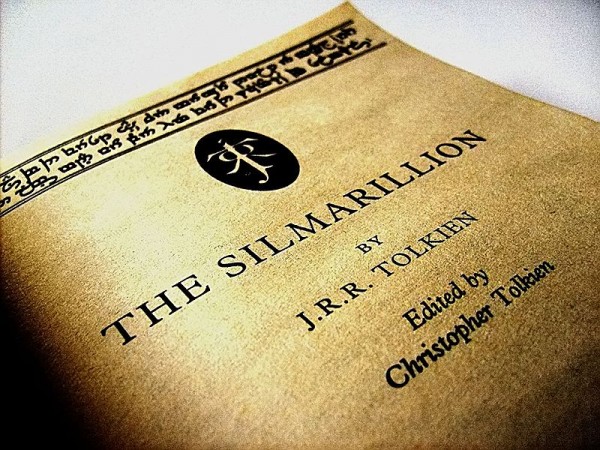
"But of bliss and glad life there is little to be said, before it ends; as works fair and wonderful, while they endure for eyes to see, are their own record, and only when they are in peril or broken for ever do they pass into song."

- The Silmarillion, "Of the Sindar." Tolkien


21 March 2016

IF - Rudyard Kipling's poem, recitated by Sir Michael Caine

This has been my favorite poem for many years, and this is easily the best recitation of it that I've ever heard.  Beautiful!


Read a bit about Kipling's story here to learn more about the depths in which this poem was formed.

07 January 2009

If china - a thought-provoking poem from Baranczak, a Polish author

If china

If china, then only the kind
you wouldn’t miss under the movers’ shoes or the treads of a tank;
if a chair, then one that’s not too comfortable, or 
you’ll regret getting up and leaving;
if clothes, then only what will fit in one suitcase;
if books, then those you know by heart;
if plans, then the ones you can give up
when it comes time for the next move,
to another street, another continent, or epoch,
or world.

Who told you to settle in?

Who told you this or that would last forever?
Didn’t anyone ever tell you that you’ll never
in the world
feel at home here?


– by Stanislaw Baranczak, 'Jezeli porcelana, to wylacznie taka.'