...observations and ramblings from a learner and traveler...

Showing posts with label Storytelling. Show all posts

21 June 2023

Justice, Storytelling, and a tiny fraction of God's magnificent enterprise

I recently heard Dr. Brenda Salter McNeil speak and was deeply challenged by her message. So, I decided to read her book Becoming Brave: Finding the Courage to Pursue Racial Justice Now. (Check your library or bookstore!) In it, she chronicles parts of her own journey in pursuing not only reconciliation but also justice, and she interacts with the biblical narrative of Esther. It's not a simple book to summarize, so I'm not going to try. 

However, what I have probably appreciated most about it is that she discusses justice across great swaths of humanity, not just one or two selective groups or 'races'. She is concerned with those you might expect and with those you might not. Here are two small excerpts that I want to share from her book, one of which is actually from someone she quotes.

It helps, now and then, to step back and take a long​ ​view.
The kingdom is not only beyond our efforts, it is even beyond our vision.
We accomplish in our lifetime only a tiny fraction of the magnificent enterprise that is God's work.
Nothing we do is complete, which is a way of saying that the Kingdom always lies beyond us.
No statement says all that could be said.
No prayer fully expresses our faith.
No confession brings perfection.
No pastoral visit brings wholeness.
No program accomplishes the Church's mission.
No set of goals and objectives includes everything.
This is what we are about.
We plant the seeds that one day will grow.
We water seeds already planted, knowing that they​ ​hold future promise.
We lay foundations that will need further​ ​development.
We provide yeast that produces far beyond our​ ​capabilities.
We cannot do everything, and there is a sense of​ ​liberation in realizing that.
This enables us to do something, and to do it very well.
It may be incomplete, but it is a beginning, a step along the way, an opportunity for the Lord's grace to enter and do the rest.
We may never see the end results, but that is the difference between the master builder and the worker.
We are workers, not master builders; ministers, not messiahs.
We are prophets of a future not our own.

(by Ken Untener)

THE STORY a person tells about other people really​ ​matters. I've learned to be much more careful and conscious of the stories being told to me about others. I pay attention to who is telling the story and their purpose in telling it. I also know that where someone begins the story shapes the overall narrative being told. (Pg105, emphasis added)

After the second quote, she tells the story of Haiti’s independence and how other nations ostracized it out of fear and greed. If you're not familiar with the story, you can get an introduction here: Investigating Haiti's 'Double Debt'.




08 November 2020

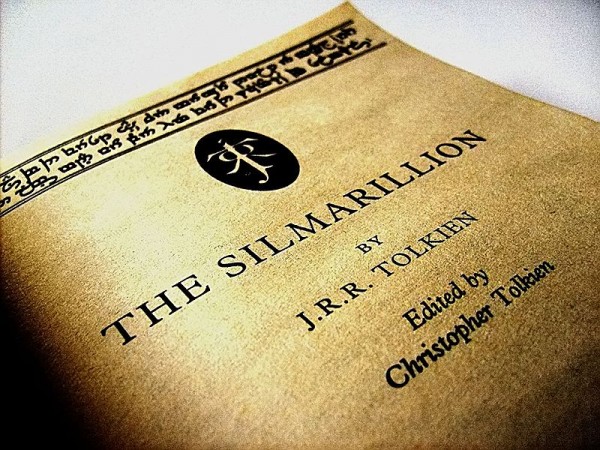
Imagining the Creation before the World's Creation - The Silmarillion, Chapter 1

   If you've read my blog or we've talked much, you may recall some of my theological speculations (sample 1, sample 2, sample 3). There's lots of areas for wondering in Scripture, many things that are hinted at, but not detailed. It is along these lines that J. R. R. Tolkien's first chapter in The Silmarillion is so gripping. 

 Middle Earth is neither a Christian allegory nor even a theologically correct construct of 'the real world'. There are elements in it that differ from what we might call a 'biblical' worldview; however, it seems to me to be a thoroughly Christian worldview. Middle Earth is a place where the creative mind that has been saturated with the possibilities latent within the world we see and the revelation that has been given to us can run free. 

  Thus it is that in the first lines describing the dawning of the reality in which Middle Earth will later occur, we find Eru, the One. Then, follows a chapter filled with what the imagination can suggest happened before the Beginning, when God created the heavens and the earth. It is a consideration of what might have been when 'the morning stars sang together... for joy' or when a son of Dawn said, "I will make myself like the Most High" (Job 38:7; Isaiah 14:12-14). It is in no way an exposition or interpretation of those passages, simply a fantasy of what might have been before our own dawning. It considers how the One knew that a darker theme would enter the Story  through pride and increase the majesty within the music, never denying the Composer one iota of the glory of His composition. Instead, setting theme against theme, the Subverter would amplify the Creator's own harmonies.

  I'd highly recommend these 10 pages of a novel as a meditation for the Christian mind. Imagination is a gift from the Creator, and Tolkien was a gifted imaginer. 

14 September 2020

thoughts and quotations from Arrakis

   One of my weaknesses as a reader is my love for old friends and the preference for their company over that of unknown, potential friends. The Dune series has become such a friend during the last decade. Frank Herbert's stunning ability to mix all things social, political, religious, ecological and philosophical with a classic, expanding narrative is deeply engrossing. He's so good that the fact that he writes with an expansive, explicit agenda is often obscured by the depth and richness of the story. Of course, any powerful writer is likely to have an agenda of some sort or other, but Frank Herbert's agenda seems far broader and more educational than most. At the same time, he avoids the commonly used device of allegory to communicate his beliefs, and he escapes becoming preachy. Instead, he weaves something new. Below are some tidbits on various topics: several are on law and governing, one on the use of technology, and others on learning, dreaming, and atrocities. Each is worth thought and not simply acceptance or dismissal.

Heretics of Dune

Law always chooses sides on the basis of enforcement power. Morality and legal niceties have little to do with it when the real question is: Who has the clout?

God Emperor of Dune

In the perception of deeper needs, I must often ignore immediate ones. Not addressing immediate needs is an offense to the young. 

It takes a pretty dull policeman to miss the fact that the position of authority is the most prosperous criminal position available.

The devices themselves condition the users to employ each other the way they employ machines.

The law develops its own power structure, creating more wounds and new injustices. Such trauma can be healed by cooperation, not by confrontation. The summons to cooperate identifies the healer.

If there is a frontier, any kind of frontier, then what lies behind you cannot be more important than what lies ahead.

Children of Dune

Atrocity is recognized as such by victim and perpetrator alike, by all who learn about it at whatever remove. Atrocity has no excuses, no mitigating argument. [...] Atrocity merely arms the future for more atrocity.

Dune Messiah

To come under siege, he decided, was the inevitable fate of power.

Dune

It is shocking to find how many people do not believe they can learn, and how many more believe learning to be difficult.

What do you despise? By this you are truly known.


06 February 2020

Chutzpah vs. Chutzpah

 My favorite living storyteller is Malcolm Gladwell; his books are the only books that my wife and I have consistently listened to together. I am looking forward to listening to his most recent book soon. Recently I listened to an episode from his podcast, Revisionist History. It was fabulous, just like I hoped; Gladwell is basically peerless in his ability to weave a narrative together.

 Due to changes in the way I commute, I have started to listen to stuff on my way home. This was quite rare until the last 18 months and still sporadic until the last several months. Because I am just trying this out, there's a lot of experimentation involved... I've tried audiobooks (Chesterton's Orthodoxy has been fantastic so far), podcasts, and lectures (English in America: A Linguistic History by Natalie Schilling was very informative, especially as an English teacher).

 Anyways, this episode of Revisionist History "Chutzpah vs. Chutzpah"was fantastic. It included the mafia and The Godfather, which I've never seen, but which my students assure me is the greatest movie ever made. It included Hogan's Heroes which our family secretly enjoys, while hoping it doesn't offend our German friends! It included a wonderfully winding story about the meaning(s) of 'chutzpah' practically (There is some inappropriate language from an interviewee.) It includes discussions of shame and shamelessness, Abraham's intercession for Sodom and Gomorrah in Genesis 18, cross-cultural differences and acculturation, immigration, and more!

 It also includes insight on modern culture, particularly American culture. Online and from a distance, I see increasing acknowledgement that the brokenness in American politics reflects the society, not causes the society's polarization. This episode essentially avoids the specifics in order to deal with the larger picture. The question it suggests  is "Have we confused [America's] chutzpah with [Israel's] chutzpah?"

All in all, this episode touches on a ton of areas that are important to me! I highly recommend it!

PS Even the ads are interesting and informative since even they are interviews done by Gladwell with business executives.

06 August 2018

A Collection of Quotes on Learning and Teaching

We are so attuned to errors and so involved in ferreting them out that we tend to neglect to praise our students when they take a risk and get it wrong. Students are more likely to take risks if they see that risk-taking is noted and encouraged. So we should be on the lookout not only for what is correct but also for good attempts.
- Ann Raimes, "Errors: Windows into the Mind." College ESL, 1991.

We have defined a story as a narrative of events arranged in their time-sequence. A plot is also a narrative of events, the emphasis falling on causality. "The king died and then the queen died" is a story. "The king died, and then the queen died of grief" is a plot.
- E. M. Forster, The Aspects of a Novel. (1956).

As a classroom community, our capacity to generate excitement is deeply affected by our interest in one another, in hearing one another's voices, in recognizing one another's presence. 
- bell hooks, Teaching to Transgress

Each writer has its own audience (intended readers) that might be part of a discourse community in which there is a degree of shared understandings and knowledge. Your class (the actual readers) may not be part of that discourse community and so they will make very different meaning and will need scaffolding if they want to read it as part of a particular community of readers. This is something to consider as you teach—what is your role as a teacher in this dilemma?
 - Leslie Turpin

This activity from Scott Thornbury's post, "V is for Vocabulary teaching" seemed useful and enjoyable:
I picked out 8 words from the text that I wanted my pupils to learn. Then I had my pupils identifying the words in the text. Task 2 was a selecting task where the pupils had to underline the words that were typical for India. They shared their work with a partner, explaining their choices. As task 3 they were matching the words with an English description from a dictionary. They also found antonyms and synonyms. Task 4 was a sorting activity where the pupils had to decide whether the words were nouns, verbs, adjectives or adverbs. Finally, as a ranking and sequencing activity I had my pupils rank the words according to preference, to decide how important they thought knowing each word was. They discussed their ranking with a partner. (Mette B.)

05 May 2018

Interviewing: Story-hearing

  My current class for the MA in Teaching English that I am working on right now is about intercultural communication and its relevance in the English-language classroom. So, we are learning about interviewing to hear - really hear - culture. This is particularly interesting to me as I assigned a class of students to do interviews a few weeks ago. I wish I had had some of these resources to share with them then.

  Below are some comments by the late Greg Sharrow of the Vermont Folklife Center from an article called, "The Art of Interviewing."

...how can you know for sure what it is like to stand in someone else's shoes-until you ask? And when you ask, it is quite likely that your understanding of the world and the people in it will expand.

If, for example, you want to learn about a culture and the lives of people who share this culture, your challenge as a researcher is to understand that experience from an insider's point of view. [...] That means that whether something makes sense to you-or even strikes you as just plain wrong-is irrelevant.

Good questions are an important tool, certainly, but the outcome of an interview will ultimately depend on how well you draw a person out and empower them to show you the shape of their world as they know it. 

...your role as an active listener will shape the experience even more than the specific questions that you ask.

(emphases mine) 

 Some of Sharrow's comments on his approach reminded me of the approach that Malcolm Gladwell says he uses.


09 February 2018

a witness to beautiful

"Sometimes when you're surrounded by dirt, CJ, you're a better witness for what's beautiful."

CJ saw the perfect rainbow arcing over their soup kitchen. He wondered how his nana always found beautiful where he never even thought to look.

from Last Stop on Market Street by Matt De La Pena

  This is one of those kids books that has depth in the illustrations as well as the content. It was just given to us, and I like it much more than I expected to - knowing nothing about it till I picked it up. I'd highly recommend it.

03 January 2018

2017 Recommended Reading

The recommendations I can make based on my reading this year may be even more eclectic than usual this year.

Theology: I try to pick one major work of theology a year to read, and then others pop up along the way.

 The Resurrection of the Son of God by N.T. Wright - I haven't read any of Wright's other main works, but this was a powerful book that was worth all of the time that I invested in it. Highly recommend! (related post)

Jonathan Edwards on the Atonement by Brandon Crawford - This was a book that dealt with the biblical matters of 'honor' and 'shame' from an entirely different context than most of my other reading on the topic. It also held interest as the work of a friend. (related post)

 Sharing Abraham? by George Bristow - This book discusses the similarities and differences between biblical and kuranic views of Abraham, particularly in their narratives and how those narratives are used. It provides a great guide to what the Kuran and Bible say about Abraham.


Fiction: I read lots of fiction; here are the best two from this year's new reads.

 San Andreas by Alistair MacLean - I've read his books for years, but somehow I seem to have missed this one.

 Sandworms of Dune - Brian Herbert & Kevin Anderson - a worthwhile read, written with Frank Herbert's notes, it did not disappoint.

BONUS: Children's Fiction
 The Book with No Pictures - This book was an instant classic in our house. I had to make the kids listen to it the first time (by command: "Sit"). The instant it finished, they begged for me to read it again... and then kept making any guests who spoke English read it to them, too, for days. (Really, it has NO pictures!)


English Teaching - I started an MA in English Teaching this year, and there are tons of good resources out there. However, most of my favorites so far have been journal articles.

  Techniques and Principles in Language Teaching by Larsen-Freeman and Anderson - This book is an exception to my general preference for articles on TESL. It clearly shows a way through the various methods that are, or have been, in vogue. I find myself referring back to it when I need clarity on things I want to try or methods I want to experiment with.

Biography/History

  Lost in Translation by Eva Hoffman - This was required MA reading about culture and language learning at the experiential level. It was beautiful; my copy is highlighted throughout. It resonates deeply with me as a TCK. Eva is a child when she moves from her home in a Communist land into the vast capitalism of Canada and the USA. Language and culture shake the worlds in and around her, resolving slowly, but never quitting. (3 post related to this: one, two, three)

 1948 by Benny Morris - It was recommended to me as a book, written by an Israeli professor, that someone inclined towards a Palestinian point of view would recommend to a friend inclined towards an Israeli point of view, who would then recommend it to others. It was insightful and informative from many perspectives.


Favorite new music for the year:

 Stirling EQ Afrikaans, the Prince of Egypt soundtrack, anything by JJ Heller, and This Christmas Time by Take no Glory


Recommendations from years past: 201620152014201320122011

22 November 2017

Emotions in storytelling

 Heart or feelings or emotions are central to good storytelling, or maybe to use Forster's word, plot-telling. Consider this quote, with the emphasis I've given it:

We have defined a story as a narrative of events arranged in their time-sequence. A plot is also a narrative of events, the emphasis falling on causality. "The king died and then the queen died" is a story. "The king died, and then the queen died of grief" is a plot.

- E. M. Forster,  The Aspects of a Novel. (1956).


30 October 2017

On Eternal Occupation (excerpts)

On half a dozen occasions, I have commented on Kevin Bauder's writings on this blog. This week's essay from him had some beautiful thoughts that I want to share.

In fact, part of the way that humans were intended to enjoy and glorify God meant looking away from Him rather than looking at Him.

If Adam had refused to shift his gaze from the divine presence, then he would actually have missed an occasion to worship and serve God.

We humans discover God’s character by looking at what God does. His mighty works of creation and redemption are the arena within which He puts Himself on display. That is why most of the Bible is a story, and all of the rest of the Bible is reflection upon that story.

We worship God, not merely by enjoying His presence and offering Him our praises, but also by serving Him. Serving Him requires us to focus, not upon God Himself, but upon the task that we are performing for His glory. 


06 September 2017

Chiasm and Biblical Narrative, simplified

 Jackson Wu's blog post on chiasm, the biblical narrative, and Western culture's difficulty with using and embracing chiasm is informative as well as thought-provoking. I particularly appreciated his graphic showing the narrative structure of chiasm. I recommend it to my friends who are students of biblical literature especially, but it may be equally useful to those who pursue the study of other literature and of storytelling, biblical or otherwise.


27 June 2017

Understanding, Listening to each other, and Knowing

 I will be posting tidbits from my grad school reading here. Much of the recent stuff doesn't relate directly to teaching; it relates to humanity and learning. The chapter mentioned below by Curran was particularly good.

The more words I have, the more distinct, precise my perceptions become - and such lucidity is a form of joy. 
Eva Hoffman, Lost in Translation

The preservation of the self-image is the first law of psychological survival. Therefore, in any social encounter each person exposes for public scrutiny and public testing - and possibly for intolerable undermining - the one thing he needs most, which is the self-perception that he has so laboriously fashioned. This mean that the stakes in any social encounter are incredibly high. No such encounter, therefore, can be merely routine.
- Earl Stevick, "A View of the Learner" (emphasis added)

This is a common major or minor tragedy of the human condition: two people meet each other, both seeking to be understood, and neither of them are able or willing to make the effort to understand. This could be like two performers in a circus trapeze act - both expecting to be caught and no one catching. One can almost feel the pain as they crash into one another after both have leaped off the trapeze. 
(...)
Consequently understanding between people cannot be presumed, even though it is a basic need of us all. That is why it is necessarily an acquired skill. To assume it, as many do, is to mislead oneself. In the assumption, one can be in the narcissistic bind of presuming one is a very "understanding" person when one has, in reality, never left oneself and one's own world. Others seldom tell us this even when everyone around us knows it. We can therefore remain in a self-deception trap. 
- Charles Curran, Understanding: An Essential Ingredient in Human Belonging (emphasis added)

11 August 2016

Patriotism vs. Nationalism: America & the Olympics

 So, as I said before, I'm watching the Olympics.  Plus, I love America (and other peoples).


  I also love reading the stories of great athletes who either have overcome great difficulty to be at the Olympics or who have achieved greatly. A couple stories stood out to me in this cycle, and I'd strongly encourage you to read them, and then I'd encourage you to listen deeply to the meaning of those stories, especially if you are American!

 Listen to the stories of Ibtihaj Muhammad and Yoshihiro Uchida. At first glance, you may here the story of the American dream succeeding - America, Land of Opportunity! But, if you listen a little longer, you will hear a different story: you will hear a story of success through hardship, often unnecessary hardship driven by prejudice or difference. Yes, these are people who succeeded against great odds, but this is also a story of a country that has still not lived up to its own ideals of being a welcoming land of opportunity to all. Fascinatingly, both of these stories are stories of patriots, people who have lived through dark sides of America, people who know that America has not reached her ideal, but who have not abandoned that ideal in their own lives. May we learn to be better humans and better Americans, through their lives.

May she be a  great bridge, not a blip!

96 years old, still mentoring!

Henry Van Dyke summarized my personal view of a proper patriotism in a line from his poem, "America for Me":

We love our land for what she is and what she is to be.

This is a view that does not deny the broken places but does not deny the good places either. May we be honest patriots and not blind nationalists! May we pursue both justice and peace, truth and grace!

20 July 2016

Trouble: the source of literature and song

Why and when are the beauties of culture and land preserved in writing  and legend?

"But of bliss and glad life there is little to be said, before it ends; as works fair and wonderful, while they endure for eyes to see, are their own record, and only when they are in peril or broken for ever do they pass into song."

- The Silmarillion, "Of the Sindar." Tolkien


29 April 2015

Classical - My Little Ones are loving it more than I do


I don't know if anyone would suggest that either of the two composers below (Camille Saint-Saens or Dmitri Shostakovich) are 'classical' musicians, but they are introducing my daughters to listening to instrumental, classical-style music with enjoyment and imagination. They beg to watch these two animated compositions over and over again. Hopefully soon we will add 'Peter and the Wold' to this repertoire for them! Please, enjoy...

Camille Saint-Saëns - The Carnival of the Animals


Dmitri Shostakovich - Piano concerto No.2 


  In January, an essay that I read by Kevin Bauder pointed me toward thinking about this topic and particularly some of these musical pieces. I especially enjoyed finding 'The Young Person's Guide to the Orchestra' through that essay, "Start Them Young." My daughters are a bit young to 'get' the music without the animation, but because of the way it's presented even they can benefit from this rendition as they begin learning about the various musical instruments and their sounds.


08 February 2014

Paul Bunyan: a new Tall Tale (by a young student)

 Paul Bunyan was America's greatest lumberjack. He was the biggest man in the whole world at that time. He was much more than 25 feet tall.

 When he was a baby, he would eat trees like broccoli. His crying used to make tornados that would make the rocks and trees fly into the air.

 At thirty years old, he was stronger an bigger than ever. But his shoes smelled like all the American garbage gathered in one place, but only when he took them off.  He could only make a bath in the sea. So Paul sometimes got lice as big as a blue whale.


 If he dropped his ax he would split apart America. Then Paul and Babe the Blue Ox would have to push on America's two sides and rejoin them. Twice he dropped the ax, and it made the Continental Divide and the Mississippi River.

 When he was 90 years old, he died. They buried him in Denver, with Pike's Peak as his headstone.

[This new tall tale was imagined with a bit of direction and a few place names by a young student; she'd never heard of Paul Bunyan till today.]

11 January 2014

Christianity, Arabia and early Islam

  Extracts from Christendom and Islam: Their Contacts and Cultures Down the Centuries by W. Wilson Cash, an old book that I am editing for reprinting in my free time... this has become another fun project for learning. Wilson speaks particularly to the need for indigenous and faithful Christ-following for every community.  As the book's title implies, he also speaks to the nature of earlier Islam in relation to Christianity.

In the expansion of Christianity in that period there seems to have been no idea of making the Church indigenous. On the other hand, everything seems to have been done to emphasize its Greek character. Harnack says, “There are no pre-Mohammed translations of the Bible into Arabic, and that is strong proof that Christianity has not found any footing at all among the Arabs in early times.” Bell, too, tells us in The Origin of Islam in its Christian Environment (page 17) that “the language of Christianity in the East was Aramaic or Syriac and there is no evidence of a Christian Church using Arabic in its services.” [...]

It is significant that Mohammed supplied for the Arabs just those elements which, if they had been provided by Christianity at an earlier date, would have made the Church a national, indigenous body with its own Arab expression. He gave them a book in their own tongue, and composed in a style that was beloved by all Arabs. They were illiterate, but they would listen for hours together to recitals of stories mainly taken from the Bible, stories spoken not in dull prose but in a rhythm that has a peculiar charm for all who know the language. He presented religion to them as a great adventure, and he centered their faith in the simple dogma of the unity of God. He attracted his followers to himself and made Islam a matter of personal loyalty and allegiance. Every Arab who became a Mohammedan felt that the Prophet belonged to him. He was a son of the desert. He lived their life and understood their point of view. While they had refused to give up their idols and their pagan customs for the Christian appeal, they readily accepted Islam. To them one faith was foreign and the symbol of a foreign power, the other was indigenous and offered security and independence.
 
“Had Christianity produced a deep impression upon Arabia it would no doubt have burst through the conventions which confined poetry to the subject and temper of the old desert life, or at least have produced a religious literature of its own. But it was left to Islam to bring that impulse, if indeed Islam did convey it to the Arabs of the desert.” (Bell, p, 50.)
 
It is doubtful indeed whether the Scriptures were ever translated into any of the North African vernaculars.
 
When Constantine the Great gave his patronage to Christianity and made the Christian faith a factor in State policy, he was laying the foundations for the collapse of Christianity four centuries later through an invading Moslem army.
 
[Early] Islam to many was a lay movement and appeared very much like a simplified and reformed Christianity.

01 August 2012

Shame.

  In the video I am about to recommend, Brene Brown shared truth that our culture and our selves need to hear.  I came across it on Anthony Bradley's website and watched it because I thought it would be relevant to something I've been thinking about.  It was relevant to a whole lot more... me, the world I live in, the world I'd like to live in.  How to live 'whole' lives, why we don't have the connections to others that God made us to have, the depths of our need for honesty about our brokenness, and many other insights.  May you find a needed part of God's truth in this video, for your self and then for your neighbor.


Two tidbits: "You cannot selectively numb emotion."  "Courage... the ability to tell who you are with your whole heart."


I rarely watch 20-minute videos; I never take notes; I always listen while working on something else.  I watched; I took notes; I focused.

06 July 2012

Book culture - an occidental phenomenon

   In Is That a Fish in Your Ear?, David Bellos provides some fascinating insight into the nature of literary translation and the languages and culture which accompany it.  Citing UNESCO's database of the top 13 most popular source languages for translation, only Swahili (and English) are not most frequently translated into English.  Swahili is translated most often into Russian, and then English second.
   75% of all translations are either from (65%) or into (10%) English.
   47% of all translated books were published in either English, French, or German.

   Bellos makes this poignant comment which should influence our thinking concerning how to spread the Gospel:

Culture is not the prerogative of any part or place in the world, but book culture [...] is heavily concentrated in Britain, the United States, France, and Germany. (pg 210)

   If you are thinking of ministering outside of those four countries, think through non-literary approaches and concentrate on them. Even though literature (particularly the Word of God) will be vital for the growth of the work of God, it may not be vital for the beginning of that work in many places.  Consider whether this was not true in earliest Christian times.

11 April 2011

Extracts on Storytelling

I have been studying storytelling over the course of a couple months to try to learn to tell The Story better; this website has some good basic advice from which I have clipped some statements.

Oral storytelling involves much interaction between teller and hearer. I have observed that our audiences have lost some of the skills to follow a narrated story and see things in their minds. Storytelling has become more difficult. Attention spans are shorter and more demanding, more sophisticated, yet less able to independently imagine or visualize. People seem to need more visual stimulation.
Once you settle on a story, you will want to spend plenty of time with it. It will take a considerable period of time and a number of tellings before a new story becomes your own. 

Once you finish the story - stop! Don't ramble on. Leave their thoughts lingering over it. Don't feel you have to explain everything, or tie together all loose ends. Let them go away thinking about what has been said, and drawing their own meaning from it!
The more you practice- the more skilled you will become. Don't be afraid to try different methods. Be creative. As you do learn from your experiences. Expect to flop, the best of us do. Don't be overly self- conscious. Have fun and share the joy of story.