Disregarding certain aspects, I found the main idea of this excerpt from Patricia Crone's Pre-Industrial Societies quite useful. This is from the beginning of the chapter entitled 'Culture.'
...observations and ramblings from a learner and traveler...
31 May 2017
Human Culture as Human Environment
Labels: Culture, Quotations
25 April 2017
A Biblical Theology of Blessing in Genesis
I have been studying blessing in the book of Genesis for a number of years, particularly concentrating on it for a two-year period around 2010. I experimented with writing my research into an article several times, but it never came together. Last summer, I decided to try to actually get the article written as a means of getting back into academic thought patterns as I start a master's in TESOL this summer.
I submitted it to Themelios, and today it was published as "A Biblical Theology of Blessing in Genesis."
I would be remiss not to mention the impact of one teacher on this whole project: without Dr. Horn, I almost certainly would never have studied, written or submitted this for publication. Dr. Horn told our class regularly to write and to submit our best work for publication, and he'd occasionally mark what our best work was. He said it often enough that I finally believed he was serious. Beyond that, he fostered my love for Genesis in one class, taught me what biblical theology was in another class, and provoked my interest in the meaning of 'blessing' in a sermon. I have truly been blessed by his impact on my life and my learning.
**A couple of previous posts that stemmed from this same study: Divine Blessing and Food; The Broken Ugly, a poem.
Labels: Articles for Deeper Thought, Genesis, Meditations, Publishing, Theology
17 April 2017
Dreaming in English - a Turkish author's ponderings on writing in English
At the end of print copies of her novels, Turkish author Elif Shafak has a short piece on why she writes novels in English; it's called "Dreaming in English." She has a slightly adjusted version of this piece posted on the English Pen. It is beautiful and well worth the read, especially if you are interested in the lives of global nomads and TCKs. Shafak expresses that sense which children of multiple cultures may have of being able to be true to each of their cultures in various ways, without betraying or abandoning any of them. She expresses the sense of belonging and connecting and loving, indeed, the sense of identity, which is felt deeply and yet somehow at a distance. I'd love to have posted the whole thing, but I'll leave these tidbits, with the hope that you will go read the whole thing for yourself (here, emphases mine).
Incidentally, for reasons she hints at in the article, Shafak is often not well regarded here in Turkey. Unfortunately, the reasons for that here (as with other authors in their own homelands) are political rather than literary. I am interested, however, in the experience she is expressing - not in either the literature itself or the politics thereof.
Labels: Culture, Language, Quotations, Recommended, TCKs
16 April 2017
Christ honoring God in the Atonement
I'm reading a recently-released book, Jonathan Edwards on the Atonement, by Brandon Crawford. While I haven't gotten to the main part on Edwards yet, several nuggets have stood out in the historical overview, particularly from the pre-Reformation period. I thought I'd post them as it is the week when we particularly recall Christ's work of atonement. These quotes derive from the thoughts of Athanasius and Anselm, and these particular ones emphasize the work of Christ in relation to God's honor and the shame brought by sin.
02 April 2017
Grief and Songs, as strangers
Recently, I have been spending a good bit of time meditating on the question posed in the middle of Psalm 137, both from that psalm and from the book of Daniel: "How shall we sing the Lord's song in a foreign land?" Having lost everything, having been taken into exile, and having arrived at the place to where the they were being forced, the question is being raised. The ones who murdered the exiles' children, raped the women, destroyed and desecrated the temple, and burned their city are requiring that they songs of Zion: the grief is fresh, "Is it even possible to sing the LORD's songs here, after all that?"
It seems to me that Psalm 137 gives two answers, while Daniel suggests a few more which I may post about later. Psalm 137's two solutions are both 'remember': the exiles must not forget where they came from - remember their origin, their God-given home. If they do that, then the songs of Zion may still be sung. The second solution is that the LORD Himself is to remember the injustices enacted upon them, those who gloried in their being massacred. These solutions are understandable for those who believe in the Psalms today, too.
It has been said that our modern culture does not mourn or grieve well. That makes me wonder if that is why the themes in this song seem difficult to find put to music in English well. Here's a variety of audio versions of the psalm:
Labels: Christian Practice, Meditations, Psalms
18 March 2017
Details from museums across Istanbul
An advantage of having visiting friends is the chance to learn by visiting museums. While I had been to parts of the museums below before, there is always more to see and learn. A few tidbits...
| an arrowhead from Israel, authenticated as being 'from the time of the Judges' (in the Istanbul Military Museum) |
| fish symbol (in similar spots, images of crosses had been removed) (in the Hagia Sofia) |
| an altar (in the Istanbul Archaeological Museum) |
| another perspective on the altar |
| The 'wall of partition' beyond which Gentiles were not allowed to enter the Jewish temple. It is believed to be from Herod's temple. (at the Istanbul Archaeological Museums) |
| Caltrops - historically used to stop calvary charges; here apparently used against infantry (in the Istanbul Military Museum) |
| a daffodil, with a snail inside (between Gulhane Park and the Archaelogical Museum) |
07 March 2017
Understanding, Attacks, and Faith
Often I wish that I could improve understanding between the cultures that I have lived in and love. My life has been spent mostly among three vastly different cultures, with a number of smaller variations or visits. Cultures do not easily or naturally understand each other. More accurately, people do not desire to listen to those whom it will be difficult to understand or who are easier to 'wonder about.' Here is an article from a Turkish newspaper that expresses commonly-held thoughts from the media here; at the center it says, "Attacks on Muslims at 2,800 separate points." It then goes on to list attacks in Canada, the USA, Germany, Belgium, Holland, Norway, Sweden, Austria, and Greece.
Do you feel threatened by those of a different religion or culture than you? Maybe they are just as scared of you. Have you met them or talked to them? Have you prayed for them or welcomed them to your neighborhood? Have you made sure they know you are a safe person for them? Are you a safe person for them?
![]() |
| "A Balance Sheet of Islamophobic Attacks in the West" "(2016 - Jan. 2017 Data)" |
A day after that article came out, this article was published in a Turkish English-language daily, concerning the difficulties faced by Christians (particularly Turkish nationals) in this country. This is the other side of the same coin, and none of this is new. Or, in an unrelated country and demographic, here is another article: this one is about anti-Semitism in Britain.
This is the world we live in: fear is easier; violence is real; our impact feels impossibly small. But, in whatever country or culture we live in, at least for Christians, we are to supersede politics - whether we agree or disagree; we are to overcome fear with love - whether it is safe or not; we are to enter the realities of others' fear and darkness (and hopes and dreams and joys!) - whether we find it comfortable or not. Whenever I hear someone fearing and judging someone from a different culture or background, I always want to know if they have at least one friend whom they love from that background. It makes a difference! A few years ago, I had two friends who are atheists tell me that they would come be with me (as a Christian) if I ever felt threatened. That meant a lot, a whole lot.
Labels: Christian Practice, Culture, Geopolitics, Immigration, In the News
02 February 2017
Resurrection - quotes from Wright
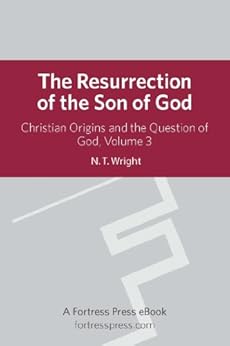
For a number of years I have been setting goals of various sorts at the beginning of the year, things to guide me in my year. Many of them I never get done, but others I do, or at least I get farther than I would have otherwise. This year, my theological reading goal was to read a substantial portion of N.T. Wright's The Resurrection of the Son of God by Easter. I had been told by a good friend that it was probably the best book available on the resurrection of Jesus Christ. And, in fact, it has been excellent - there are certainly things to disagree with along the way, but the book has painted a beautiful picture within historical and literary contexts of the ideas of resurrection in the ancient world. Here I'd like to share some extracts, any emphasis is added by me.
01 February 2017
Panoramas of Istanbul
This week I got to return to one of my favorite views of Istanbul. There are probably 5 places that I think are best to see the city from, considering both the city's beauty and its vastness. Galata Tower is relatively famous for this, but I think it's terrible - not the view, the expense to get the view, the crowdedness, and the overall experience. The place that we went to instead is a nearly perfect substitute - 360Istanbul. The view is superb in many directions; and the price... well, it's expensive, but only if we are talking about the drinks. A pot of tea today cost us less than a single adult ticket to Galata tower (19tl to 20tl).
| St. Anthony's Cathedral, Beyoğlu (center); Sultanahmet with Hagia Sofia (distant right); Asia (distant left) |
By the way, my other favorite panoramas of the city include the following: The Seven Towers (Yedikulesi - previous post), the Princess Islands (previous posts 1, 2, and 3), the restaurant on top of the Bosphorus Swissotel (where I asked my wife to marry me), and the ferries (many people's favorite part of a visit to Istanbul).