...observations and ramblings from a learner and traveler...

31 March 2023

What does this image mean?

 Even some rather basic images can communicate in some surprisingly intricate ways. You may remember this picture puzzle from childhood:

Stand under do you

 Last night while with friends, I saw the this image on one of their hats. The friend had gotten the hat from lost and found and hadn't interpreted it yet. Together we mumbled through key words and stumbled upon the hidden meaning in a brilliant flash of illumination. I'll put our key words in light text below so you can work through it for yourself. Select the text if you want to see them though.

(source of above image)

  The interesting takeaway is that an apparently random picture can cause a group of people with shared knowledge to suddenly yell the same thing. Images are powerful.


"Is that a Bengal goat? πŸ˜€" 

"My friend had a golf hat."

"It's striped. Isn't it a tiger?"

"Oh!"


Tiger is the GOAT!!!

24 March 2023

Ruth: Overturned expectations

  I'm doing some studies in the books of Judges and Ruth, and I am currently reading a commentary written by a Jewish scholar on Ruth, Yehoshua Bachrach; it's called Mother of Royalty. It's got a variety of helpful insights, but two that I found particularly interesting come from Ruth chapter 2.

  This chapter starts out by introducing Boaz, the wealthy, "mighty man of valor" and relative of Naomi's dead husband, whom one might naturally expect to take up the slack and fill the needs of Naomi and Ruth which were known to the town and which Boaz can intuit from what he has been 'fully told' (2:21). Yet, he does nothing apparently. Then 'by chance', Ruth ends up gleaning in his field, and when he speaks to her, he allows her to continue as one of the poor who glean in the corners of the field and offers her water. Her response to him contains a rebuke: "I am a foreigner. Why do you even care about me?" (2:10) He should have already cared and shown it:

Ruth’s remarks contained an unintentional reproach – a rebuke to the kinsman, the redeemer, who had ignored his own relatives and had allowed Naomi to sit at home, alone and hungry. Here was Naomi’s daughter-in-law. She had come to gather food for her aged mother-in-law. […] Was she not instead crying out in protest at all the humiliation inflicted on the entire house of Elimelech, so cruelly treated in Beth-lehem? (pg 85, emphasis mine)

  Whether or not the reproach is intentional, Ruth is suddenly rebuking the 'mighty man of valor' who has not taken responsibility for his aged relative's poverty and has instead allowed a foreigner to do so! Indeed, Ruth's being a Moabite almost certainly told against her being socially accepted in Bethlehem according to the understanding of the Mosaic Law, but did it require others' inaction to care for her poor mother-in-law? Here was a 'foreign woman' who had acted upon YHWH's Law better than YHWH's people.

 A bit later (2:19-20), we find another reversal of our expectations regarding this 'man of valor'. Instead of the wealthy man blessing the two widows, it is the two widows who have here blessed him, and one of them is a Moabite! Citing Yalkut Shim’oni, Ruth Rabba 5.9, Bachrach quotes:

More than the householder does for the poor man, the poor man does for the householder, for so Ruth said to Naomi: “The man’s name for whom I wrought.” She did not say “who wrought for me” but “for whom I wrought.” I wrought him many benefits in return for the one morsel of food which he gave me. (94, emphasis mine)

 Even if Ruth is not quite as bold as the above comment suggests, this is still a remarkable set of verses as the order of blessing is unexpectedly overturned. Over and over in the LORD's system, we see that the weak, the poor, the unworthy, or the unknown are only so labeled in the eyes of those who don't see clearly. May we grow in seeing and being properly, as the One does!

13 March 2023

CoTESOL - What I still want to remember 4 months later

 Last November, I got to go to CoTESOL, Colorado's TESOL conference; it was a great experience with a healthy variety of speakers. Many of the sessions focused on a different area of language learning than I usually do, cross-cultural K-12 English users. Due to this, some of the most interesting sessions were connected to the presenters' stories of migration, emigration, and immigration (or their families'). I thoroughly enjoyed many of the speakers' sessions: Lulu Buck, Emily Francis, Don Vu, and Beth Skelton are all people to learn from and enjoy it. But I want to mention a few other sessions that I found particularly interesting. 

 But before that... For any non-teacher Americans who have gotten this far, some statistics might be the most interesting takeaway. In the USA, 10% of K-12 students have a home language other than English. 80% of those multilinguals speak Spanish. After Spanish, the next four most common additional languages in US schools are Arabic, Vietnamese, Russian, and Mandarin. Overall American schools have a rich diversity with over 300 different languages being spoken in its K-12 schools nationwide. 

 Specific to Colorado, in 2022, there were 110,000 multilingual learners with 280 different languages. Here Amharic (#4) is added to the above list of commonly spoken home languages. All of this suggests why it's possible to see monolingual people as somewhat limited. πŸ˜³πŸ˜¬πŸ™Š (This data also suggests why it could be reasonable and beneficial to expand the amount of translation that is done in official spaces since only 4-6 additional languages would be needed in most states, not 300. Oops, this is beginning to sound political... πŸ˜³πŸ˜¬πŸ™Š, again.)

Carol Salva 

-  I don't have a long list of quotes from Dr. Carol, but she talks about teaching in the way I want to teach. She exudes love and hope for her students. If you get a chance to hear her or follow her on FB, I'd highly recommend it. Her ideas are practical and caring and focused on the students' potential. Also, she's humble enough to ask for help and then talk about it publicly...

- "[Students] aren't going to believe anything more than what I believe." (for and about them and their abilities)

Monica Lara

- "When you're a second language learner, you're a second language learner for life."

-  quoting Luis Moll, "The concept of 'funds of knowledge is based on a simple premise: people are competent and have knowledge, and their life experiences have given them that knowledge."

- She also talked about the QSSA strategy for conversations; it seems like a valuable riff on think-pair-share.

Jamal Khlifat - "Cross-linguistic Syntactic priming between Levantine Arabic and English in bilingual speakers"

- This presentation sounds incredibly complex, but it was extremely interesting. Basically, Dr. Khlifat's study shows that exposure to greater complexity moves students to express themselves with greater complexity. This is true even if the exposure occurs in the learner's native language! In other words, if you give a language learner a relatively complex text in their own language and then have them write in the target language they are learning, they will write with relatively more complexity than if you prime them with a simpler text (in their own language). The research was done between Arabic and English, but studies to explore this in other languages are ongoing.

- This study seemed to me to both support the concept of grammaring (showing grammar in real contexts instead of starting from the textbook with definitions and prescriptions), and it also "could serve as a counterargument to monolingual-immersion  teaching/instruction." This was one of three pedagogical implications given. The other two were "A learner's native language should be viewed as a resource, rather than a problem for educators to circumvent." and "Priming texts in a learner's native language serve[s] as a scaffolding tool."

Sonia Felix Naix - regarding "Ilots bonifiΓ©s" - "Collaborating to Maximize Participation in EFL Classrooms"

- This presentation was fascinating and presented a beautiful system for encouraging participation. She shared the main form needed to implement the system as well. The major challenge with learning the system was that one needed to know French as it was developed by a French teacher, Marie Rivoire in 2012. Little to nothing about it seems to have appeared in English before this presentation. Ms. Felix Naix was most interested in hearing from anyone who tried out the system.

09 March 2023

Dogs in the Bible

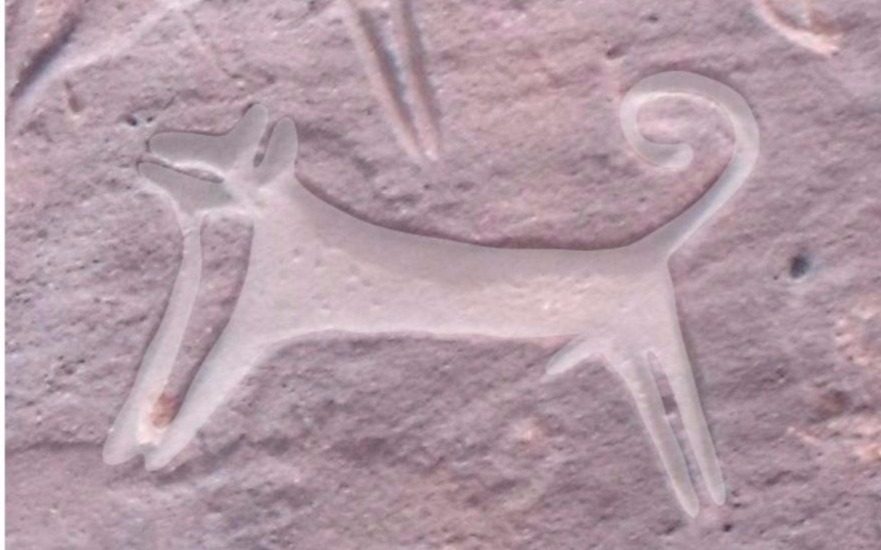
  Yesterday evening in our small group Bible study, a couple of us were interested in this reference: "But not a dog shall growl against any of the people of Israel, either man or beast, that you may know that the LORD makes a distinction between Egypt and Israel." It's in the context of the angel of death who is going to execute the firstborn sons throughout Egypt, and it is of rather minor theological significance. However, in a culture which loves puppies, it is interesting: this appears to be the first reference to dogs in Scripture.

ancient hunting dog art

 So, how are canines mentioned in the Bible? Well, honestly, the references to dogs don't seem particularly different from today.

"Pets" (domesticated or household dogs)

- Exodus 22:31; Matthew 15:26-27 & Mark 7:27-28 (food thrown to dogs)

- Job 30:1 (sheep dogs)

- Psalm 68:23 - 'the tongues of your dogs may have their portion from the foe' - sounds like guard dogs

- Isaiah 56:10-11 - watchdogs

Name-calling or Self-deprecating humility

 - 1 Samuel 17:43; 24:14; 2 Samuel 9:8; 16:9; 2 Kings 8:13; Psalm 22:20; Philippians 3:2; Revelation 22:15

Packs of Dogs

- The above Exodus 11:7 reference seems to be concerned with possible violence from a dog. It could be a watchdog, but it seems more likely to refer to packs of dogs in light of some of the later references. Other references in this category would include 1 Kings 14:11; 16:4; 21:19, 23-24; 22:38; 2 Kings 9:10, 36; Psalms 22:16; 59:6, 14; Jeremiah 15:3

As dirty animals or animals with dirty or inappropriate-for-a-human habits

- Judges 7:5 - "a dog laps"

- Proverbs 26:11; 2 Peter 2:22 - "A dog returns to its vomit"

- Matthew 7:6 - "do not give dogs what is holy"

Unclear or Random 

- Deuteronomy 23:18 - "wages of a dog" - maybe a dog loaned out for hunting purposes???

- Proverbs 26:17 - "a passing dog"

- Ecclesiastes 9:4 - "a living dog is better than a dead lion" - maybe for guarding???

- Luke 16:21 - dogs licking sores - this could be seen as sympathetic and healing, or a sign of misery; the dogs could be from the household or a pack potentially ???


**Prov 30:31 mentions an animal which is unclear for translation ("girt of loins"), possibly a greyhound or a strutting rooster.

ancient dog carving from Saudi Arabia

25 February 2023

from Augustine's The Teacher

Somehow Augustine's The Teacher made its way onto my reading list. This afternoon I took the time to read it. It's interesting, but what follow are not organized quotations, just notes and quotes that I wanted to preserve somewhere. The early discussion in the book about words and meanings is also interesting, but the discussion on the difficulty of actually 'teaching' mirrors  something I've talked about often with my students: demonstrating that learning happened is much easier than demonstrating that teaching has. I've heard it said that 'teaching' cannot be demonstrated to happen, only learning. Anyways...


from Augustine's The Teacher. trans by Robert Russell. 1968.

- pg 42 - Adeodatus, Augustine's son, touches on just how hard it is to define teaching. At the beginning of the dialogue, they have already pointed out that speaking in pursuit of learning is a method of teaching what one wants to know. 

- pg 44 - " Then it has been established that nothing can be taught without signs, and that we should value knowledge itself more highly than the signs which lead us to it, though it maybe that some of the things signified are not superior to their signs." 

pgs 45-46 - Augustine goes on to show how one can teach through real example the way to do something for an intelligent observer, not just through signs.

- pg 45 - "It is hazardous to mistake what is not known for what is known."

- pg 49 - "Certainly, when I learned to know the reality, I did not rely upon the words of another, but upon my own eyes, though I did possibly rely upon words to direct my attention, that is, to see what there was to see by looking."

- pg 49 "But the man who teaches me is one who presents to my eyes or to any bodily sense, or even to the mind itself, something that I wish to know."

- he then goes on to demonstrate how hard it is to use words to teach words; if we know what something means, we can't learn it. If we don't, we can't say we know what it is until we know the meaning.

- pg 54-55 - When one is asked a question and answers in the negative but then led to answer positively through a series of questions, this is still not teaching. It is simply that he is being led to perceive the problem more completely. They are helping the person to see things more clearly with their 'inner light'.

Then he discusses that questions must be matched to "that Teacher who teaches from within" apparently referring to Christ, who had been mentioned earlier.

When someone hears something I express with words... "In none of these cases, therefore, does he learn. It follows, therefore, that one who does not grasp the reality after hearing our words, or who knows that what he heard is untrue, or who could have given the same answer, if asked, has learned nothing by any words of mine."

pg 59 - "Do teachers ever claim that it is their own thoughts that are grasped and retained, rather than the branches of learning themselves which they purport to transmit by their speaking? What foolish curiosity could ever prompt a man to send his child to school in order to have him learn what the teacher thinks? But when teachers have made use of words to explain all those branches of learning which they profess to be teaching, including even those dealing with virtue and wisdom, then those who are known as pupils reflect within themselves whether what has been said is true, contemplating, that is, that inner truth according to their capacity. It is then, therefore, that they learn. And when they discover within themselves that what has been said is true, they praise their teachers, unaware that they are not so much praising the teachers as they are praising those who have been taught, provided, however, that the teachers also know what they are saying. But, men make the mistake of calling people "teachers" when they are not that at all, because there is generally no interval of time between the moment of speaking and that of knowing, and because their coming to learn from within follows quickly a upon the suggestive force of the speaker's words, they think that they have learned externally from him who spoke those words."

pg 60 - "Words merely stimulate a man to learn."

pg 60-1 - "He alone teaches who made use of external words to remind us that He dwells within us."

22 February 2023

fun with alarms and their verbs


picture of various phone alarms displayed

 Yesterday evening in class, a dear elderly gentleman, one of the most diligent students I've had, had a new question for me. The text in the book was having the students use 'phrasal verbs', those amusing two-word, one-meaning verbs like 'get up' or 'go ahead'. The text was specifically using them in the context of alarms, like smoke alarms. He wanted an explanation for the phrasal verb used when an alarm sounds. 

Why do we use 'goes off' to say that an alarm 'turns on'?

 After asking his question, he carefully stared off into the middle distance so as not to put me on the spot as I publicly and verbally pondered the ridiculousness of this linguistic oddity for the first time. "Your alarm is going OFF; please turn it OFF, or it won't go OFF... er, ahh, I mean it won't stop going OFF."

 After a bit, I readily admitted to the class that this certainly had the potential to throw off (!) a night's sleep, at least until my alarm...


13 February 2023

A Recommendation, a Waxwing, and a... well, one more surprise

  The smallest graces and beauties in life often arrive quite unexpectedly. I truly love birds and seeing a variety of them. One result of this is that my current favorite game is Wingspan, a beautifully drawn and well-designed board game which a friend gifted us a few months ago. Somehow competition is combined with beauty and a pinch of education to make a thoroughly enjoyable game experience, although it's too complex for the kids still. But I digress...

  Last week on a walk along a bike trail I saw a flock of Bohemian waxwings. I wouldn't have known their name if I hadn't happened to see this article about it in the Denver Post a few days before, "A rare and beautiful bird is turning up all over Denver this winter." Apparently these waxwings haven't been to Denver since I was a toddler. They were far more beautiful than the rather distant picture below suggests. The two colorings, presumably male and female, were both lovely; and the dozens of waxwings were in no rush to go anywhere else. But this morning...!

Bohemian waxwing

 Driving down Holly Street to drop kids off for school, I saw a bald eagle! I have loved eagles since I was very young, and they always make me think of my granddad because he had a house full of bald eagles (pictures, sculptures, and whatnot). Again, the picture quality below is lacking, but the gift of seeing beautiful birds wherever I'm at was not lacking in any way. Thankfully, we had a couple minutes to get out and take pictures of the bird before I dropped the kids off. Then I went back to look at it again in quietness.

A bald eagle, in Park Hill, Denver

 I said 'quietness', but actually you may notice in the video below that the crows and magpies were thoroughly disturbed that the eagle had entered their normal space. That's what the racket is, but the eagle seems unconcerned with it. And well he should!

 Actually this is the second time in the last several months that we've seen eagles. In November, driving back from Thanksgiving, we saw some bald eagles in Kansas, but they were away across a field. So even though we trespassed into a corn field, we still couldn't get particularly close.


03 February 2023

Philippians and the Presence


The Albanian Alps
The Albanian Alps
 

  That the Maker of this unimaginably great universe would approach -draw near to- creatures he made is one of the great mysteries and realities in the Bible. What kind of God cares about minute creatures on a tiny planet in the midst of this stunning magnificence, especially ones who have rejected his lordship? Yet, throughout Scripture, we do not only find the Maker coming as a Judge of rebels, though that is certainly part, and we do not only find a Presence through pure symbol like fire or cloud or dove, but we also see the approach of intimate call to relationship and friendship with the One. Of course, this was manifested ultimately when God became human enfleshed. [This is not the often-accused impossibility that a human should somehow became GOD, but the belief that GOD stooped low to become one of us.]

  As I've been reading in Paul's letter to the Philippians, I was struck by the practical relevance of the Lord's presence for the Jesus-follower. In 4:5-6 (below), the soon-coming or approach of the Lord is the basis for not worrying. In other words, don't worry about the future because the Lord will be there. Several verses later, Paul says, the way to practice right thought and action is with the knowledge of the God of peace's current presence with you. In other words, you can live in God's way now because the God who will gives peace is actually with you. 

  Since these verses about the presence of God in the future and the present came so close together, I wonder if this letter mentioned the presence of God in the past with these sorts of practical implications. And it does. In chapter 2:4-8, Paul writes that Jesus-followers are to have a sacrificial and unified attitude towards each other and others. Then he gives the basis of this as such an attitude is already 'yours in Christ Jesus' because of Jesus' past presence in coming and dying, along with his exaltation. From other Scriptures, we can see that being 'in Christ Jesus' relates directly to our being in the Presence. So, we have here the past presence of God enabling a God-ward present inner life and attitude. 


Let your reasonableness be known to everyone. The Lord is at hand; do not be anxious about anything, but in everything by prayer and supplication with thanksgiving let your requests be made known to God. And the peace of God, which surpasses all understanding, will guard your hearts and your minds in Christ Jesus.
Finally, brothers, whatever is true, whatever is honorable, whatever is just, whatever is pure, whatever is lovely, whatever is commendable, if there is any excellence, if there is anything worthy of praise, think about these things. What you have learned and received and heard and seen in me—practice these things, and the God of peace will be with you. (Phil 4:5-9, ESV)

Let each of you look not only to his own interests, but also to the interests of others. Have this mind among yourselves, which is yours in Christ Jesus, who, though he was in the form of God, did not count equality with God a thing to be grasped, but emptied himself, by taking the form of a servant, being born in the likeness of men. And being found in human form, he humbled himself by becoming obedient to the point of death, even death on a cross. (Phil 2:4-8, ESV)


26 January 2023

a thought on sabbatical, from pre-sabbatical reading

 We've been encouraged and enabled to take a time of sabbatical soon. Along with that, we've had various reading offered to us. The following quote comes from one of them in which Eugene Peterson compares academic and ministerial sabbatical's purpose and methods. The quotation below caught my attention in the former context.

The life of the mind, teaching and thinking, is strenuous. The mind tires, grows stagnant, begins to repeat itself. The annual invasion of students, their curious and questioning minds strangely mixed with ignorance an sloth, constitutes a formidable challenge to a professor.

~ Eugene Peterson, "Sabbatical is not Study Leave"

03 January 2023

2022 Reading

2022 included three features that guided much of my reading. First were the two excellent classes on Christianity and Islam which I took from ISRME, as well as the resulting book club. These launched me into readings on religion and religious thought as well as by a couple of authors from the Middle East. The second feature was packing up for a year in the States, and the third was the excellent inter-library loan system in Denver.

The goal of sorting through various books I'd been given or bought very cheap means that I flipped through, skimmed, or got gradually drawn into various books too, such as LaHaye's How to Win over Depression or Watson's The Godly Man's Picture. Although LaHaye's book has a few insights of value, mostly it just seemed very dated and insensitive in many comments. Watson's book had various thought-provoking aspects. Reading older (17th century) writers has that beauty of showing both how things (including language) change and how things (especially human beings) remain the same.

For ISRME, our first classes' reading involved complementary selections from Religious Affections (Edwards) and The Faith and Practice of al-Ghazali and James' Varieties of Religious Experiences. These authors formed a surprisingly cohesive dialogue in spite of the fact that they wrote centuries apart and in vastly different cultures. (previous post, another one)

City of Wrong by Kamel Hussein (on Archive) - A fictionalized meditation on the crucifixion and its surrounding events by a Muslim author. The version with the introduction by the translator Kenneth Cragg is particularly helpful as Cragg, a Christian friend of the author and respected scholar of Islam, offers a Christian perspective on the book which reflects their apparent friendship and dialogue and brings up the key issues in sympathetic discussion. Highly recommended for those interested in this area! (previous post)

Children of the Alley by Naguib Mahfouz - This book by an Egyptian author is an allegorical consideration of the Prophets, prophethood, and societies responses to them. It is an insightful fictional consideration from the Muslim perspective. Fascinatingly, there is also a 'prophet of modernity' as such. (previous post)

Prophetic Precursors by Wilson - a useful comparative study of the different histories and interpretations of the prophets in Christianity and Islam

T. S. Eliot's Four Quartets - With the encouragement of two dear friends, this poem has become an increasingly dear friend itself. This year I finally got a hard copy and read it through. Much marking up of it occurred.

Epidemics and Society (Snowden) - I'm only part way through this 2019 book on epidemics, but it's proven fascinating, particularly so given that Snowden wrote it pre-COVID. The section on the non-medical issues which epidemics create in societies was particularly interesting.

Whispering the Word: Hearing Women's Stories in the Old Testament - Jacqueline E. Lapsley - I've done a lot of reading in stories centered on the end of Judges and the book of Ruth this year. Lapsley's book was one of the most beautiful to read. It was scholarly, empathetic, and devotional all in one. Critically it engaged with the real critiques of feminists (Christian and otherwise) regarding these stories in substantive ways, which I found helpful in both their honesty and their faith-perspective. It's worth getting and reading.

The Sultan of Byzantium by SelΓ§uk Altun - This was a 2021 Christmas gift after I'd come across it in a bookstore, and it has easily become my favorite novel by a Turkish author. It's themed a bit like a Byzantine version of Da Vinci Code, although it includes the episodic nature of other Turkish novels that I don't really love. It often lacks linkage between the various scenes. Anyways, it was quite enjoyable, and I'd recommend it for those looking for a new author: even my Turkish friends hadn't heard of this author. 

Iron Dragon series (all 5 volumes) - I read the entire series for the first time this year: eighth century Viking, sci-fi, space saga involving futuristic and past time travel. Very fun!

The Lonely Sea by Alistair MacLean - short stories by a favorite fiction writer!

The Mysterious Mr. Quin (Harley Quin Mysteries) by Agatha Christie - I'd never heard of these, but really enjoyed the spiritual-mystery writings by this beloved author. Excellent short stories!

The Gift of the Stranger by David Smith and Barbara Cavill - a book that considers language education from a Christian perspective; I have really enjoyed reading the thoughts of others thinking about what I spend my job hours doing.

Albert Luthuli: Bound by Faith by Scott Couper -  I already posted about this informative biography and what I learned here.

Audiobooks: During our various travels in the last months, we have enjoyed various audiobooks. The key to a great audiobook is great content tied to a great reader  Here’s the ones we’ve most enjoyed as a family, enjoyable for all!

The Incorrigible Children of Ashton Place (series) - written by Maryrose Wood, brilliantly read by Katherine Kellgren - accessible, humorous, mysterious, and educational as the author regularly uses and defines high-level vocabulary cleverly

The Tale of Despereaux - written by Kate Dicamillo, read by Graeme Malcolm - an exciting tale of a mouse, a serving girl, and a princess

Reread: The Simarillion (Tolkien) & The Eleventh Commandment (Archer)


Recommendations from years past: 2021, 2020, 2019, 2018, 2017, 2016, 2015, 2014, 2013, 2012, 2011